Rss

Archives for : Book & Movie Reviews

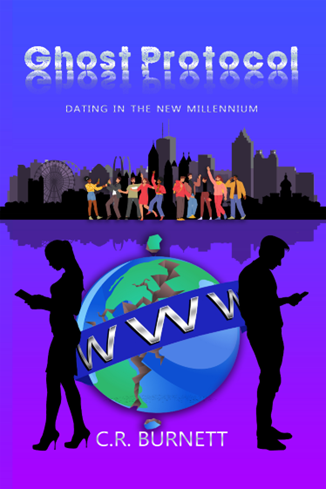
Ghost Protocol: Dating in the New Millennium by C.R. Burnett Q & A

Everyone, I am pleased to announce that an upcoming romantic comedy and life experiences book will be hitting shelves soon from an associate of mine, C.R. Burnett! Read below for more details!

Ghost Protocol: Dating In The New Millennium delves deep into the realms of ghosting, online dating, and the ever-elusive search for true love. Ms. Burnett’s empathetic approach to the subject matter allows readers to relate to the struggles and triumphs of the characters, offering valuable insights and advice for navigating the turbulent waters of modern romance.

With her unparalleled ability to capture the essence of our time, C.R. Burnett emerges as a visionary voice within the realm of relationship literature. Her debut short story collection promises to be an indispensable guide for anyone traversing the dating landscape of the new millennium, providing both solace and inspiration in equal measure.

Release date: November 23rd, 2024

Book Trailer: https://youtu.be/hLEk_TieZZw

About the Author:

C.R. Burnett is an emerging author who has brought forth a captivating insight into the intricacies of modern-day dating with her inaugural book, Ghost Protocol: Dating In The New Millennium. With a unique perspective and a knack for understanding the complexities of human relationships, Ms. Burnett masterfully navigates the ever-evolving world of romance in this thought-provoking and engaging read.

As an author, Ms. Burnett’s writing style seamlessly blends humor, wit, and astute observations, creating a literary experience that leaves readers both entertained and enlightened. Through her compelling storytelling, she sheds light on the challenges faced by contemporary individuals seeking connection in an era marked by technological advancements and societal shifts.

–

I sat down with Ms. Burnett for an interview that I’d love to share with you!

When did you start to write and what drove you to write this book?

I began writing at a very young age—just three years old—when I first mimicked the words in the letters my father sent to my mother when he was in the Air Force and stationed abroad. This early exposure to the written word sparked a lifelong passion for writing. I was inspired to write Ghost Protocol: Dating in the New Millennium based on my own experiences and those of others as we navigated the complexities of attempting to form genuine relationships in a digital age. As online dating became the new norm, I witnessed firsthand the challenges and often awkward moments that come with trying to connect with others in this evolving landscape. This book aims to explore those experiences and offer insight into finding meaningful connections in a world increasingly defined by technology.

What can you tell us about the book?

Ghost Protocol: Dating in the New Millennium delves into the complexities of forming genuine relationships in an era where access to anyone, anywhere, paradoxically leads to greater disconnection. It explores various relationship types, including friendships, romantic connections, and family dynamics, highlighting the breakdown of communication in our interactions with each other. Drawing from both personal anecdotes and the experiences of others, it uncovers the challenges and awkward moments of navigating relationships in general while seeking to provide insights for fostering meaningful connections in real life in this increasingly digital world.

Tell us more about yourself. What’s your background?

Well, I was born on an Air Force Base in Kansas, lived in quite a few states due to my father’s enlistment, and once he completed his duty, we settled in Nashville, TN where I grew up and call home. I graduated from high school and college in Kansas, where my parents are both originally from. I’ve always had a passion for storytelling, which first emerged in grade school when I began writing short stories featuring my friends and me as heroines in supernatural adventures. This love for writing continued into junior high, where I served as an editor for the school newspaper, honing my skills in crafting engaging narratives. In high school, I turned to poetry as a way to process my experiences and emotions, and I contributed to a poetry review publication that deepened my appreciation for the art form.

I pursued a Bachelor of Arts in English Creative Writing at Kansas State University, followed by a Master’s in the same field from Southern New Hampshire University. It was during my graduate studies that I began working on my book as a capstone project, culminating in my graduation in 2017. Since then, I have also had the privilege of teaching English at the college level, where I share my love for literature and writing with my students.

What made you decide to write about the perils of modern dating?

You know, if I had a dollar for every crazy conversation screenshot that I’ve collected over the years, I could probably fund a small indie film about modern dating! I’m saving them for the revival of my Woke Girls Don’t Date podcast. Seriously, it’s astonishing how decorum seems to have taken a back seat in today’s online interactions.

What really drove me to write about the perils of modern dating is how vastly different it feels now compared to the 80s and 90s. Back then, dating had a certain simplicity and sincerity that seems lost today. Now, with the internet providing both a shield for people to hide behind and an overwhelming number of options, it feels like many people are reluctant to truly commit, fearing they might miss out on something—or someone—better. It also seems like everyone is afraid of being who they truly are for fear of being either judged or rejected. These paradoxes complicate connections, making the pursuit of anything genuine and meaningful feel much more daunting than I remember from my single days before marriage.

Do you have any other ideas you’d like to write someday?

One writing project that I am focusing on next is completing my novel, Snow Falls on Darkness, which I’ve been developing for quite some time. The story is loosely based on my real-life experience of surviving a relationship with a narcissist who became dangerous after I discovered his infidelity and broke up with him. It delves into the complexities of relationships, the importance of female friendships, and how longevity doesn’t always equate to loyalty. The narrative highlights an unexpected bond formed between women from different backgrounds—an African American female lead and a white woman seeking help to escape her toxic marriage to that same man. It’s a story I believe needs to be told, and I hope it resonates with many. You can find the prologue to the story at http://snowfallsondarkness.blogspot.com.

In addition to completing my next novel, I’m fleshing out a book of poetry and another novel I started some time ago that’s tentatively titled The Marilyn Monroe Syndrome. This story follows a woman into her golden years who explores the idea of having multiple men in her life for various purposes (most of them nonsexual), reflecting on Ms. Monroe’s belief that no one man can fulfil all the qualities a woman seeks to have in a successful relationship with a man. I’m particularly looking forward to interviewing a vibrant 80+ year-old woman in North Carolina who has lived this dynamic since the passing of her second husband; I can’t wait to learn about her insights on this intriguing concept!

Which series or films do you think people who would like your book watch? Is your book similar to something they’d already recognize?

While there isn’t a specific series, film, or book that closely resembles Ghost Protocol: Dating in the New Millennium, I believe readers who enjoy relatable narratives about everyday life and relationships will appreciate my work. I intentionally steer clear of stereotypes and the typical overdone African American tropes; instead, my characters are just like you and me, facing universal struggles such as communication and connection. This focus on authentic experiences makes the story relatable to a diverse audience, allowing them to see themselves in the characters’ journeys.

You currently reside in Dallas, TX. Did that have any influence on what you wrote in the book?

While I believe the experiences highlighted in Ghost Protocol: Dating in the New Millennium are universal themes, Atlanta, Georgia, serves as the backdrop for the stories in this book. It’s often stated that Atlanta has a notably imbalanced ratio of eligible women to men especially in the African American community, which adds a unique context to the narratives of my stories. From ghosting to catfishing, this book delves into the ups and downs of relationships in the digital age, offering insights and perspectives that I hope will resonate with readers everywhere, including those in Dallas, TX and beyond.

What made you choose the title Ghost Protocol: Dating in the New Millenium?

I chose the title Ghost Protocol: Dating in the New Millennium because it perfectly captures that Urban Dictionary definition of ghosting — “when a person is seen as not being fully present in their dealings and communications with other people.” It’s like everyone’s playing hide and seek, but without the seeking part! The term “protocol” adds a dash of humor to this deliberate process of avoiding conflict and communication, like we’re all part of an unwritten rulebook on how to disappear. I think I just invented a new diagnosis — Ghost Protocol Syndrome! Haha! It is both fascinating and frustrating how in a world where we have more ways to connect than ever, we often end up feeling more disconnected. It’s like we’ve got smartphones but lack the heart-signal strength for a true connection!

Which other writers and books do you enjoy?

I have a deep love for many great African American authors that I studied in college and continue to read, such as Toni Morrison, Alice Walker, Maya Angelou, Zora Neale Hurston, James Baldwin, and Frederick Douglass — there are so many more! I also enjoy works by Neale Donald Walsch, Richard Bach, Dan Brown, Robert Ludlum, Dean Koontz, Stephen King, and J.K. Rowling. I’m drawn to stories and ideas that open the mind to new possibilities and perspectives, especially unique character journeys that break the mold, as well as narratives rooted in reality, such as the mysteries throughout humanity’s history that leave you questioning their truth and the conspiracies surrounding them.

Interested in more? This book will be available on November 23rd, 2024 in e-book and paperback! Stay tuned for the pre-order link, plus a chance to win prizes!
ConTinual Panel: Marvel’s Echo (Comics Lair)

Honestly, what can be said about Marvel Studios’ absolutely amazing mini-series about Maya Lopez? A lot! So come hang out with me and a bunch of nerds discussing the incredible recent show, Echo.

Comics Lair ConTinual Panel: Across the Spider-Verse

Come join me and other geeks talking about one of the best comic book movies in recent history, Across the Spider-Verse! All hail Burrito Peter!

Comics Lair ConTinual Panel: The Marvels

I hope you enjoyed The Marvels as much as we did! If so, please join me and a panel of wonderful fans as we discuss the ins and outs of The Marvels!

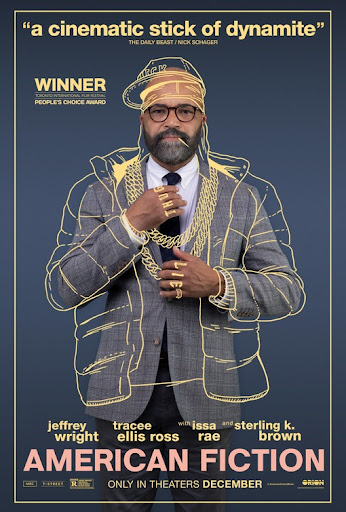
An Ode to American Fiction (2023)

“The flame might be gone, but the fire remains

And I’m stuck on a path to my own ruin

Did you see me behind the wheel?

Did you see me behind the wheel?

And the flame might be gone, but the fire…

-“Remembered” by The Dear Hunter

Sometime in the middle of last year, I heard the premise for American Fiction (2023) and thought it sounded like an absolutely genius concept completely relevant to not just my experiences as an author, but the experiences of a whole bunch of POC that I personally know. Lo and behold, upon viewing it, they knock most of it out of the park (I don’t like the final act, personally; I think it doesn’t feel cohesive and satisfying enough to end what was a REALLY good story in the first and second acts). Enough that it’s why I felt like I wanted to blow the dust off my blog for an entry. I think this movie is going to give us a lot of cud to chew as a society, and that it’s definitely a conversation worth having among black authors in particular.

Let’s get into it. Before we start, spoilers for American Fiction (2023). At the time of this post, it is still in theaters so if you want to get the juicy details, I recommend you pop out to a theater. Its theatrical run was extended thanks to the Oscar nominations.

American Fiction is about a struggling black professor named Thelonious “Monk” Ellis who is vexed by the fact that his work is actually quite good, but it doesn’t sell because it’s complex and not palatable to the masses. After a lot of misfortune, he gets the idea to write a book that’s both pandering to urban fiction readers and is a middle finger to the industry that puts out books that basically (in his opinion) reinforce harmful black stereotypes and sends it to his publisher under a different pseudonym, laughing that he will get reviled reactions to writing tripe. Well, the opposite happens! Immediately, a huge publisher says they want the book and to offer him friggin’ $750,000 for it. Monk is gobsmacked, but since his sister just died and his mother was just diagnosed with early onset Alzheimer’s, he reluctantly decides to take the offer. Things get even more complicated when the book blows up as a number one bestseller and he gets a movie deal, despite his chagrin and embarrassment, and he struggles to reconcile the fact that the worst thing he’s ever written is now his most successful book.

So, in my family, my older brother and have a running joke about the fact that I am a fairly good writer (or at least I feel that I might be one; none of the good writers ever know it or believe it even when given evidence) but I make nothing off my books because I don’t write to market, and if I just sold out and wrote bad smut or books for basic bitches, I’d be a millionaire.

You can see why I went right out to see this film as a result.

American Fiction’s biting sarcasm and relentless exposure of the faults in the publishing world and the black community is definitely going to be remembered by all relevant parties. This film shines a light on something that the average person, regardless of race, ethnicity, and nationality, probably doesn’t know. Way too many people don’t know how the writing and publishing world works, and this film does. It truly gets it. It gets what black writers go through and it gets what the mainstream publishing world sounds like. Whoever wrote it definitely has either experienced this crap directly or is intimate with someone who does, because everything in the film proceeds exactly how it does in real life, for the most part.

And that’s what got me thinking.

If I had to sum up American Fiction (2023) in a word, I’d say it’s about responsibility.

So in the story, one of the reasons Monk decides to write the most base and pandering piece of crap novel is after having to endure watching a book seemingly just like it blow up by a black female author named Sindra. It inadvertently puts him on edge every time he has to be somewhere and see her book, given that the book just panders to every black stereotype since that is the genre expectation for urban fiction. Finally, in the third act, he and the author are in the same room and he asks her why she considered his book (keep in mind, she has no idea he wrote it) pandering, yet hers doesn’t count. She fires back that she’s writing to market and that it’s not her fault if white people or other people think that all black people behave the way they do in urban fiction. The film is basically examining personal responsibility as an author and in particular, as a black author.

And I can say for certain that is going to ring through the halls of history as relevant for decades to come.

The film has a very intelligent argument and I appreciate the living hell out of it being in a big production movie that is now an Oscar nominee. Now, don’t get me wrong—fuck the Oscars. Yeah, I said it. They’re archaic, antiquated, and utter crock. Most of the time, if a good movie gets an Oscar nom, it’s a fucking coincidence. The Academy in no way is interested in awarding the “best” movie anything; this is a room full of people that wanna be pandered to, and the harder you pander, the more they’ll pat you on the back, which is why damn near every year is the same fucking movies getting nominated. It’s aggravating as hell and it’s why they are continuously losing the public’s attention. People are tired of unknown garbage getting attention, especially since the Academy is who’s being lambasted by the very same film they nominated. The Academy doesn’t want to hear shit from POC unless it’s a story about their pain. Every once in a blue moon, you’ll get competent and joyful films winning like Everything Everywhere All at Once, but largely if POC are nominated, especially black people, it’s because it’s talking about our pain, not our triumph, and the Academy seems to think the only relevant stories we can tell are about our pain, which is exactly what is discussed in this film, and it’s handled rather well.

But I do take a departure from Sindra’s argument.

Sindra’s argument boils down to “people enjoy what I write and I’m not wrong to write to that market; it’s the responsibility of white people to not believe nothing but stereotypes.” That’s a good, solid argument…but I disagree. I understand the argument completely and I think I agree to an extent, but my problem with what’s discussed in the film is more of a long term, wider scale problem than an isolated one.

The reason that I dislike that type of writing is that it reinforces negative stereotypes about black people that affects things outside of just the reading world. What I’m concerned about is the long term effects of writing that kind of fiction. Sindra is correct; it is the responsibility of society to not reinforce negative stereotypes, but I argue that authors hold some of that responsibility too. It is for this very reason that you see a lot of popular white authors either never writing black people (even if the character LIVES IN THE MIDDLE OF FUCKING CHICAGO NOT POINTING FINGERS OR ANYTHING BUT YOU KNOW WHO THE FUCK YOU ARE) out of fear that they’ll “get something wrong” and offend POC or they seldom write them and cheat readers out of what could be an interesting character and story. If these white authors don’t have POC in their lives, first of all, that’s sad and they need to get their shit together, but second of all, they feel like they’re too scared to write POC because all they’ve ever seen are Tyler Perry movies and Worldstar and Eric Jerome Dickey books, so they have zero frame of reference for the black experience, so they skip it. While that’s an isolated problem, it’s much bigger than that. The problem I have with Sindra’s argument is that when you endorse this type of writing, there are real life consequences.

I’ll give you an example. Let’s say there is a job opening for a front desk clerk at a dentist’s office. The hiring manager has two candidates that are the same age, have the same level of education, and have the same level of experience needed for the job. Both of them have great interviews, too. One is black and the other is white. For the sake of the argument, let’s say this hiring manager is white. Now, here he sits with two resumes of identical people. How does he make that decision? Well, if this hiring manager has seen nothing but Tyler Perry movies and reality TV shows, what are the chances he starts thinking about his black potential candidate as being a problem? More than likely, it’s gonna creep into his head and influence the decision, so he passes on the black candidate based on falsified evidence of what black people are like. That’s my problem with Sindra’s argument. This is of course a small situation and I’m sure that black candidate doesn’t want to work for someone who would turn him down based on him believing an incorrect stereotype, but that’s my point.

Opportunities can be taken away from black creatives based on negative stereotypes. And that isn’t just black people, too—people of color in general have to struggle with the fact that the white population is still in control of most of America’s working parts, and so we have to contend with extra stress and problems that they don’t necessarily have based on race. This is of course not to say white people don’t have problems; of course they do, they have the same problems except for the fact that when white people act out, no one blames the entire race. And that’s what black people—and POC in general—have to contend with on a daily basis. I cannot tell you how many micro-aggressions I’ve had to endure being  a black woman in the South. It’s truly maddening how differently you’re treated as a black woman in America, but the South really can get under your skin and make you frustrated with how they handle everything down here. Sindra’s argument, to me, is too idealistic. I would love to live in a world where stereotypical behavior is not viewed as blamed on an entire race of people.

But that’s not the world we live in.

Someone once said that being a woman is like ballroom dancing backwards in high heels, and it is. But I would argue being black is very similar. We can’t just be as good as our white counterparts—we have to be better in every way, and even when we are better (though to be fair, better is a very subjective term for this argument), there is still an enormous possibility that we get nowhere because the person at the gate is someone who looks at us and sees nothing but negative stereotypes. We have to work ten times harder for the same reward that would’ve been considered on normal merit had we not been a POC. That’s why I don’t agree that there is no responsibility with us as black writers. I think we have to pay attention to what we’re putting out there because even if it seems like no one cares and no one’s watching, someone certainly is and they can unknowingly affect the outcome of a black person’s life based on their experiences. I’d love to say that we can get there as a society, but I’m not confident in our ability to understand complexities.

But that’s also what I like about the film. It is a complicated argument with plenty of support for both sides and I love that someone wanted to have this conversation at all. This is exactly what all low-to-mid-level black authors go through at some point, especially the indie and small press crowd. I certainly don’t feel negatively towards urban fiction; who the hell am I to judge? If y’all saw my Browser History on AO3, you’d have plenty of stones to throw into my little glass house. But what I am saying is that I think it’s still our responsibility as black authors to think before we write something that might have a Domino effect down the line, but we also need to call out the people who make shitty decisions based on stereotypes at all times. We can’t let up on that. It’s ridiculous to sum up a whole race of people based on a 90 minute movie or a season of a reality show. We shouldn’t do it to each other and we shouldn’t do it to other races, nationalities, and ethnicities. Hell, that’s how we’ve had a resurgence of fucking Nazis in America; instead of punching them in the face, people said “we should hear them out” and now we’ve got a whole ass third of the country insane enough to storm the fucking Capitol to assassinate the Speaker of the House and the goddamn former Vice President. This. Stuff. Matters.

And yes, I know that’s a huge example for such a modest film, but that’s why I feel so strongly about the argument the movie presents. It’s surprisingly the small stuff that can make a difference in the writing world. I also think that every writer, no matter how successful, should be fostering friendships and relationships to help each other out. We are not in competition. All of us should reach down and pull the person below us on the ladder up, not pull the ladder up behind us so they can’t reach out of fear. We have to uplift if we want things to change. We have to keep having these conversations to eradicate as much of that learned hatred as possible.

And I really think films like American Fiction (2023) are how we get closer to that goal.

So thank you to everyone who had anything to do with making it. Even though I didn’t feel the ending was right, I really had a good time with the first and second acts and I hope they get to bring home the (irrelevant) gold just because it would be good for America to find out just how fucking rough it is out here for black authors.

But we persevere.

Here’s to you, American Fiction. Knock those old bastards at the Academy dead when it comes time.

Kyoko   

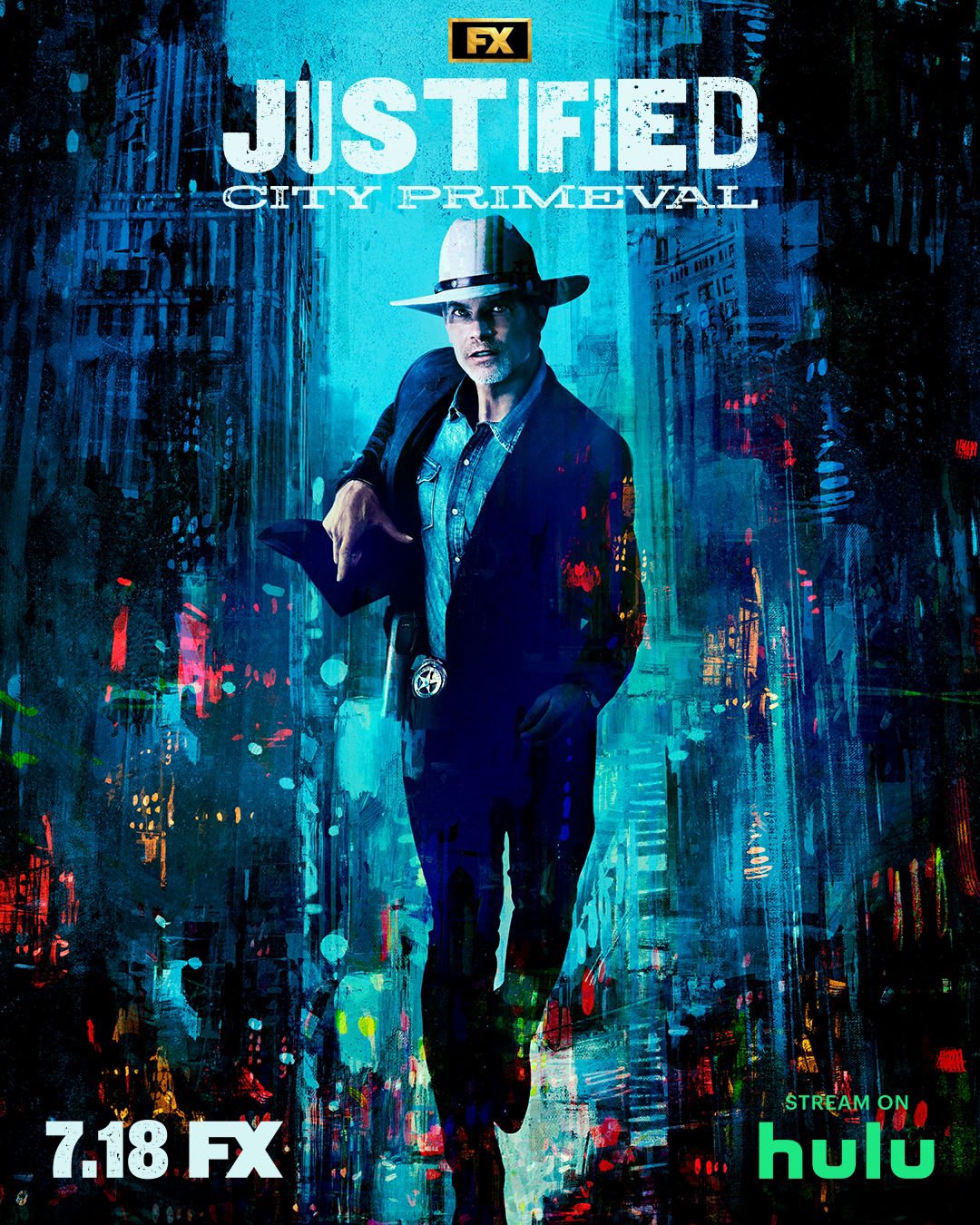
Cautionary Tale: Justified: City Primeval

Too much of a good thing can be bad for you, and I think there is no better example than TV shows that get after-the-fact mini-series or additional seasons after their initial run, like Justified on FX. For those who are not aware, Justified was an FX show starring the infinitely talented Timothy Olyphant as US Marshal Raylan Givens, based on the book series written by the late Elmore Leonard. Givens is a modern day cowboy of the most badass variety, and Justified is a love letter to urban cowboys. I wish I could say the show was perfect, but it is far from that; in my opinion, it should only have had four seasons. I found season five to be bad except for the most epic villain death in television history (if you must know, look up “Justified Twenty-One Foot Rule” on YouTube and sit back and enjoy), and season six was dogshit. Therefore, when it was announced there would be a new mini-series ten or so years later, I remained cautiously optimistic and began to tune in each week via Hulu.

And what I found is unfortunately a lot like when Dexter ended, then returned to try and close the loop a little better the next time around.

Which is the subject of today’s episode of Cautionary Tales.

So all the way back in the year of our Lord 2015, I wrote a cautionary tale blog post about Justified’s lousy final season. To sum it up, the last season was very forced and it was apparent the writers had no more good ideas as they’d used them up in seasons 1-4, so the last season ended on a pathetic whimper and I won’t get into it because it’s a sore subject. But I knew all the way back then that there was a finite amount of talent in the writers’ room, and I had hoped that the big gap of time between the end of the original run and the revival would have given them the time to find a good story. I actually bothered to grab the book that this series is loosely based on, City Primeval by Elmore Leonard, just because I wanted a preview of what I might expect here. The book has a reputation for basically being a middle of the road title for Leonard’s career, but the reason I’ve brought it up is because of the context. This book has nothing to do with Raylan Givens. The book is actually about a character named Raymond Cruz, but the Justified producers decided to take Cruz out and plop Raylan in since the show, while never an enormous hit, had a modest viewing of two million viewers until the final season, which lost about half a million viewers after season five was NOT good and season six was even worse. They knew they had a built in audience that would likely return for a revival, so they decided to take the plot from the book and just assign it to Raylan instead.

And honestly, I think it was a mistake.

Not a huge mistake. Not a catastrophic “I hate this” mistake.

The problem is that this revival is nothing but wheel-spinning.

Let’s get into why this is today’s lesson of cautionary tales.

Naturally, massive spoilers for the ending of Justified and for episodes 1-7 of Justified: City Primeval. At the time of this post, the series finale has not aired, so this is more of a retrospective recap and discussion of where I think things went wrong.

Alright, so here’s the basic set up: in the original series, Raylan was reassigned back to his hometown of Harlan county Kentucky after he shot a mobster to death in a crowded restaurant in broad daylight in Miami. Long story short, the original series ends with him surviving Harlan and going back to Florida, which was where he was before the shooting. We pick up close to ten years later with a very seasoned Raylan dealing with his preteen daughter, Willa, whom he had with his ex-wife Winona, and Raylan catches a case that sends him up to Detroit, Michigan. Now, Raylan is very familiar with some Detroit mobsters that had a foothold in Harlan county because it’s a backwater town full of gross racist pieces of shit and so the drug trade is huge in Harlan and so is the general crime. After arriving to Detroit, he crosses paths with Clement Mansell, an Oklahoma Wildman who has no regard for literally anyone or anything. Through sheer dumb luck, the judge Raylan was working with runs into Mansell and Mansell snaps, killing the judge and his assistant in their car in the dead of night and taking the judge’s book full of blackmail material on dozens of Detroit citizens. Mansell, who is a career criminal but managed to walk on a technicality thanks to his lawyer-under-duress, Carolyn Wilder, then gets with another one of his associates named Sweetie to start blackmailing the people in the judge’s book to make money off them, citing that once he has enough, he and his side piece bimbo Sandy will retire to the tropics.

Now, that sounds like an alright idea on paper, but unfortunately, I think the bad writing from the final season carried over into this one. The biggest problem of the show so far is that while I get that Raylan is a fish out of water, none of the things that make him a great character other than that sly sense of humor and swagger are present in this mini-series.

Raylan Givens has two important things working for him as a US Marshal: he’s incredibly intelligent and observant and he’s an amazing shot. Those two traits define him as a character. Most of the fun of the original show is watching the Harlan criminals figure out that Raylan’s intelligence and perception mixed with being a crackshot make him next to impossible to evade or defeat. And what I’ve always loved about Raylan is that he is always fair. Almost every time he’s had to confront a convict or an escaped felon, he explains exactly what he’s going to do and what their situation is and he lets them make a choice. And 99% of the time, the dopes in Harlan county think they can either outthink or outdraw Raylan and they are dead wrong, pun intended. So I was excited to see Raylan in a new environment, ready to see him adjust and change and grow in this new city.

And yet I’ve gotten 7 episodes of absolutely nothing.

I’m someone who understands that a new series can mean that they make changes and I won’t necessarily always like said changes, and that’s okay. The issue I have with this particular change is that it makes me wonder why they bothered to tell this story if Raylan’s intelligence and amazing shooting skills are not at all in use this entire series. He never gets the drop on Mansell. He and the Detroit cops fumble the investigation so badly that I frankly would be annoyed if I were a real Detroit cop because they basically make them look incompetent. The decision to basically neuter Raylan and not give him any decent leads or even just use his own intuition to figure out how to get this guy behind bars is infuriating. The difference with this series in particular is that it’s not like Mansell is very clever in how he commits crimes. The guy is blatantly doing whatever he wants, but the Detroit cops are so stupid that they somehow still can’t lock him up. So forgetting the judge and assistant’s murders, he also attempts to rob an Albanian guy at gunpoint and breaks his leg when the guy doesn’t have any money for him to steal. He was caught on audio by the police trying to blackmail a civil servant. He murders his co-conspirator, Sweetie, and burns down the bar. He executes the guy whose condo he and his bimbo had been staying in, basically for no reason, in broad daylight in an upscale condo. Did you read all of that? Now explain to me how the heck the cops can’t find any hard evidence or anything to get this guy locked up?

I’ll tell you how: shoddy writing. And unfortunately, this has been a problem for as long as fiction has existed. Often, lazy writers don’t want to make a villain smart and always one step ahead of the protagonist because it’s “too hard,” so what they do instead is simply make a dumb protagonist who bumbles all the attempts to catch the villain. And that’s really the biggest issue I have with Justified: City Primeval. The writers decided to take the easy way out by making the Detroit cops idiots and make Raylan a neutered puppy who can’t anticipate any of Mansell’s moves or gather any evidence that would lead to some kind of conviction. All of the momentum of the previous show is not present in this mini-series.

And you know, I’d be less salty about it if the content we’re seeing that is not Raylan investigating Mansell was good, but it’s not. Now, I will say that Raylan and Carolyn Wilder’s fling is by far the only legitimate enjoyment I’ve gotten out of the show. You’re welcome to throw a Criminal Offensive Side Eye at me for it; I’ve wanted Timothy Olyphant to have a black female love interest for 10 years and this series gave me exactly what I’ve always wanted (just no sex scenes, grrrr) and I’m okay with my own bias in that regard, but everything else in the show suffers as a result of the show not delivering good content. The performances are good, don’t get me wrong, but nothing is even coming close to the enjoyment we had back in Harlan county with the kooky criminals and the interesting fellow marshals in Lexington. This revival comes across as a cash grab leaning on an established IP to get viewers.

And based on the reactions from the Justified fandom, I don’t think the show is hitting for them either. I’ve been hearing complaints about Raylan’s lack of police work since episode two. I personally had reserved judgment and was hoping it was going slow in the beginning, but it would pick up in the middle, but it didn’t. The needle has not moved an inch. The entire plot is only moving forward because of Mansell, not Raylan, so in the end, it makes the show feel like Raylan was the Decoy Protagonist and the show is instead all about Mansell, who is an irritating piece of shit in every regard, and it annoys me greatly that this actor’s fangirls have clogged the Tumblr tag with a bunch of disgusting simping for a man who murdered his own mother in cold blood and threatened to rape an underage girl in front of her father. But that’s a long story I’m not gonna get into.

The central fact of the matter is that if you’re going to resurrect a show, then you have to do your due diligence in—and pun fully intended here—justifying its existence. From what I read of the book, it was a decent story that was worth telling. This story is not worth telling. It adds nothing to Raylan’s dimensions as a character and the “rivalry” they are attempting to set up with Raylan vs. Mansell is weak because the show has not developed it. I went through my head and thought about how many scenes Raylan and Mansell have had together and oddly enough, it’s not very much. He gets under Raylan’s skin because he’s a slimeball and knows it and yet the laws of man somehow just don’t apply to this guy, but that’s it. There is nowhere near the history between them like some of Raylan’s far better opponents like Boyd Crowder or Dickie Bennett. They might as well have just not made this revival in the first place if the only thing that would be good about it was Raylan gettin’ it on with a smart, powerful black woman who can handle him in a way none of the skanks he’s slept with in the past ever have. (Yes, I said it. Every woman Raylan has ever slept with in the original show was a skank. Come at me, scrublords, I’m ripped. )

Some of the issue, too, is that the supporting cast is nowhere near as strong as the one in the show’s original run. Our cast of characters is too big and so no one’s getting the focus they should have in order to make them more interesting. I already mentioned that Mansell has a stranglehold on the screentime and everyone else is left with pieces. There have been two majorly important conversations between Raylan and Carolyn that were cut short that I think was a massive mistake: seeing how they hooked up for the first time, and this most recent episode when she bluntly asked him how he would get Mansell’s prints on the murder weapon. We should have seen more content for Carolyn, Sweetie, and the detective that Raylan’s been partnered with, Wendell. None of these relationships are elaborated on enough to really make us care about what’s transpiring. It’s all too much of a light touch with Mansell as the focus, and frankly, if the new show is so enamored with this douche, then you should have just adapted the book as-is instead of including Raylan since Raylan isn’t getting to do anything the entire time.

I also want to take a little aside here and mention a pet peeve of mine. Anyone who knows me knows about my theory about what I call White Bitch Syndrome. White Bitch Syndrome, in a nutshell, is when writers coddle white female characters (and 90% of the time they’re also blonde) when everyone else in a story has to pay for their mistakes and live with the consequences of their actions. The number one reason I hated the final season of Justified was because the show went full White Bitch Syndrome with a character named Ava Crowder, who basically spent all six seasons being a reprehensible piece of shit and got away with everything solely because white woman. Now, the bimbo Sandy Stanton is nowhere near the level of cunt that Ava Crowder is—and yes, I use that term sparingly, but Ava Crowder has earned it, trust me—but she is still being coddled and I absolutely despise the way that she’s been Mansell’s accomplice, but only now does she realize he doesn’t care about anyone but himself and would kill her the second she defected. It’s not fair for you to make all these other characters pay for their actions, but she gets to walk because she’s blonde, white, and female, but again, this was Justified’s MO in the original show. Ava got away with everything and Winona’s stupid ass walked out on Raylan too without a scratch on her, cementing her as one of the dumbest characters of all time since there is no man in Harlan county like Raylan and any woman with sense would jump at the chance to be with him. But I digress.

I guess, overall, the words I would use for this revival are “unnecessary” and “unsatisfying.” It doesn’t feel like it needed to come back if this was the material it returned to in the end. Is it better than the last season? Eh. In some ways, yes. There are better characters here and Raylan isn’t acting like a complete psychopath willing to throw his badge and life away just to kill Boyd Crowder, but at the same time, this isn’t a worthy story for Raylan Givens, especially if like I suspect, they kill him off in the series finale. This was not the right choice for him and it seems to have fallen into the traps like the Dexter revival I mentioned above (keep in mind, I never watched Dexter, but I knew it had one of the most hated finales of all-time and I know about the revival’s reception only because my dad watched it over winter break one year and we chatted about how it went).

Is it possible the series finale wows me and fixes all the problems I had in episodes 1-7? Yes. Is it likely? No. My guess is that they left all the action in the final episode so it’s an incredibly bottom-heavy series with an unsatisfying conclusion. Rest assured, if they kill Raylan off after an incredibly lackluster season, I will simply go into denial like I did with the original final season, as I sadly have had to do with a lot of shows I used to love.

So what can we learn from this debacle?

A few things, really. First, don’t bring back a beloved character unless you have something relevant to say about them or about any sort of important subject matter that you want to write about. Second, if you are more interested in writing about the antagonist than the protagonist, then you need to establish that right out of the gate instead of leading people on to think the story is centered on the protagonist. Third, learn what scenes need to be elaborated on and what can get cut that won’t be detrimental to the overall story. Fourth, don’t be lazy and make a dumb protagonist so the antagonist can get away with everything; do the work of writing a competent antagonist and a competent protagonist equally. Because if you don’t do that, you end up with a trope that has a name I forget that has to do with Lex Luthor; don’t write your bad guy getting away with his crimes so often that it induces apathy within your audience because Status Quo is God. This trope refers to Lex Luthor as the main example of how a conflict between good and evil can get boring if the bad guy ALWAYS gets away with his crimes so that the work of fiction can continue to be made. We all know that Lex is never going to jail—not for anything serious that he’s done and not for any significant length of time if they do get him on something eventually—and so Superman defeating him time and time again can get old if you’re not adding any new dimensions to the struggle. Lex fared a little better in Superman: The Animated Series because Supes and Lex were engaged in, for lack of a better word, a cold war. Lex does a bunch of illegal, shady shit and Clark tries to stop it or tries to gather evidence to either put Lex away or destroy his chances at future crimes, and that worked for that show’s format. You have to balance it with victories and losses for both sides or your audiences will lose interest.

And frankly, that’s about what happened by the time I finished watching episode 7 of City Primeval. I’ve just lost interest in what they decided to focus on and this isn’t a return to form for Raylan Givens nor this writers’ room. But what can you expect when the last season was also a dried turd?

If nothing else, I’ll commend them for giving Raylan an age-appropriate, interesting love interest with whom he had actual chemistry. That’s the best thing I can say for City Primeval, personally. I guess we’ll see if they somehow buck the system and stick the landing, but my guess is I’ll be just as disappointed with this finale as I was with the original one, and that’s a damn shame considering the enormous talent of the cast in this mini-series.

Better luck next time, my long legged cowboy boyfriend.

“On this lonely road

Trying to make it home

Doin’ by my lonesome, pissed off

Who wants some?

See them long, hard times to come…”

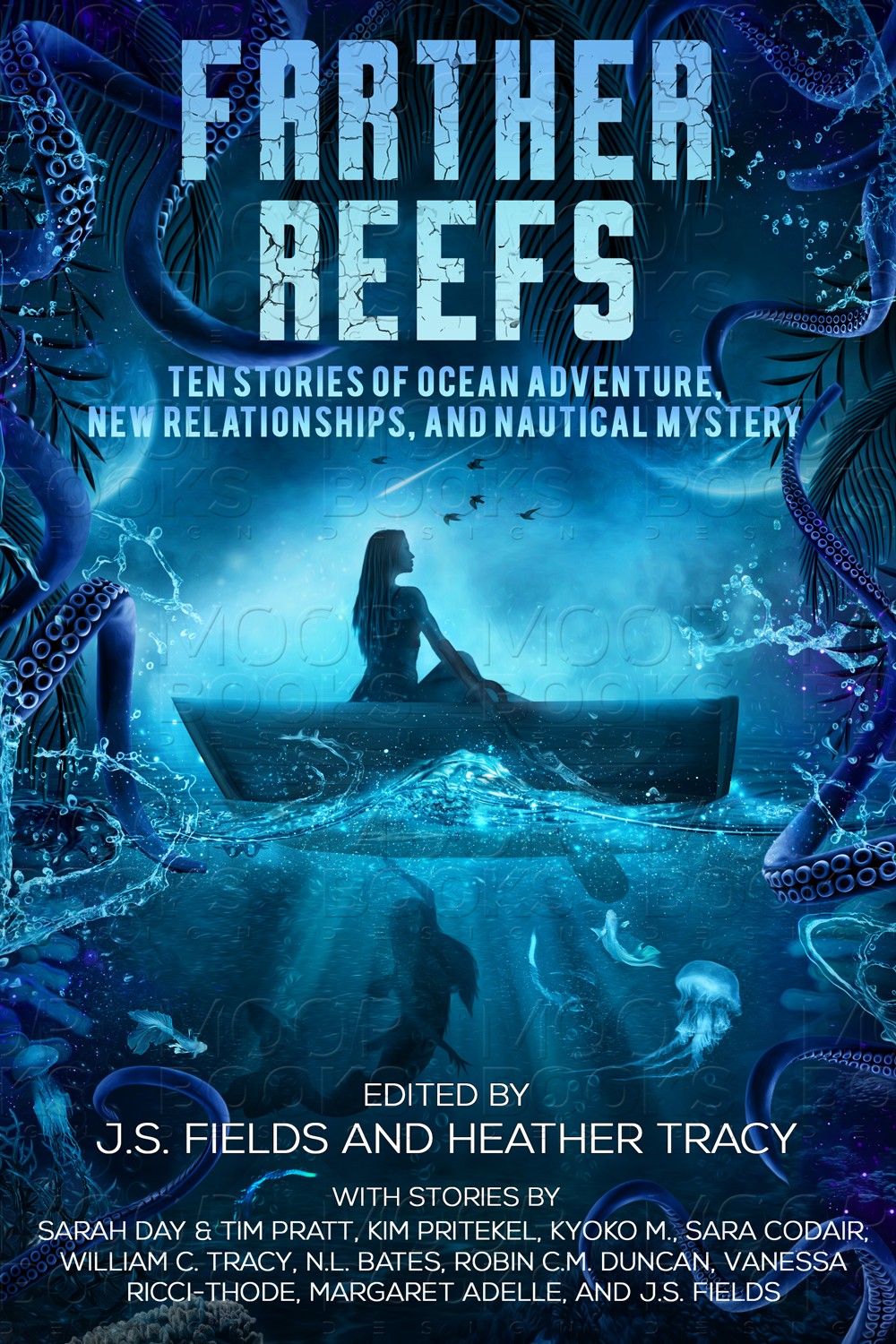
Farther Reefs Anthology

Cover designed by Moor Books

Pirates and kraken, boats and submarines, deadly sirens, mermaids, and the women who face them all. These are our heroes.

High seas adventure, fantasy, and magic weave together in this sapphic anthology focusing on the joy of the unbounded oceans.

If you like diverse stories with lesbian and sapphic heroines exploring oceans, battling sea monsters, and seducing pirates, buy Farther Reefs today!

Pre-order a copy today! Release date is October 18th, 2022.

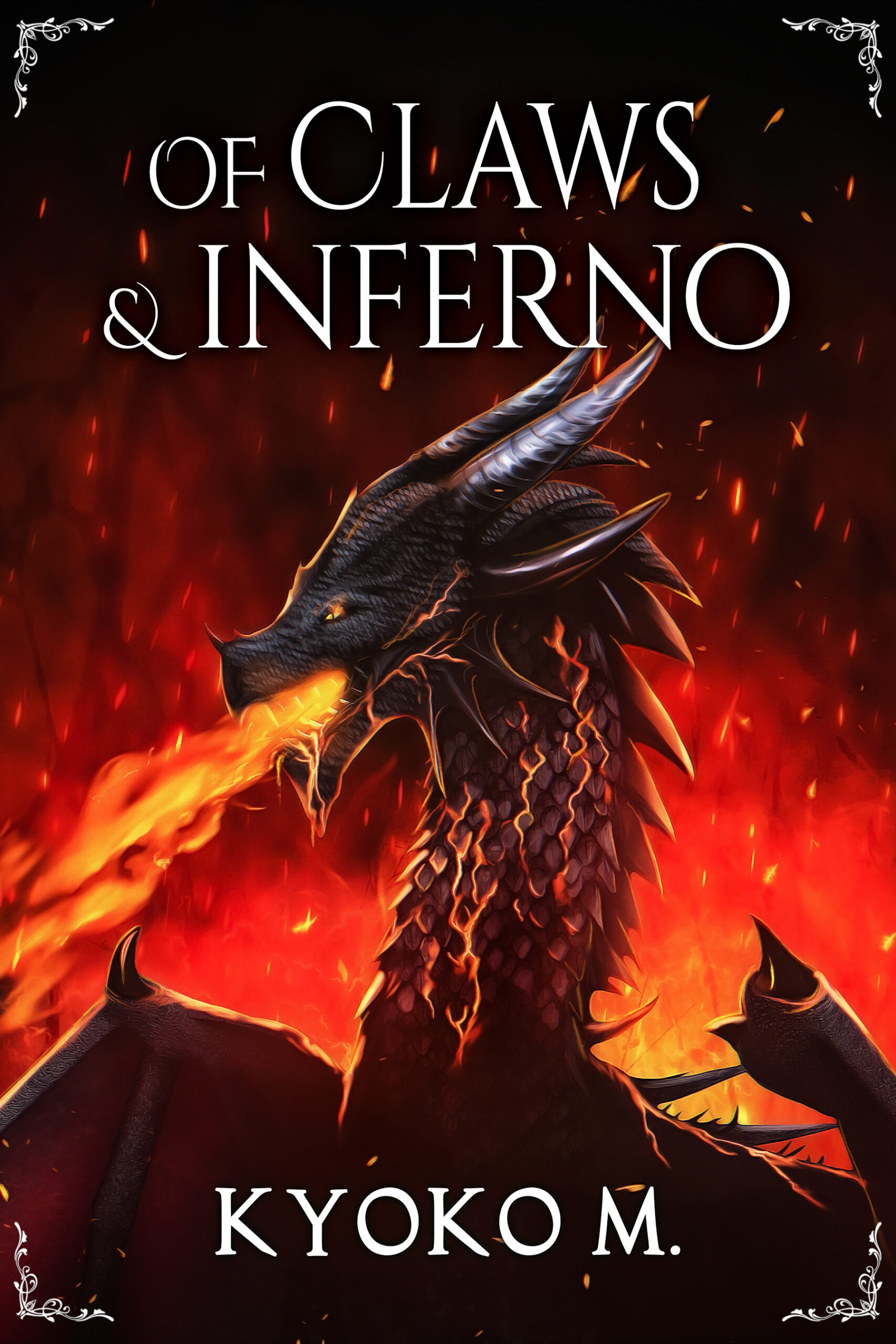
Of Claws and Inferno – Excerpt #2

Cover art by BRose Designz

We’re coming up on the release date for the fifth novel in the Of Cinder and Bone series, Of Claws and Inferno, so here’s your second excerpt! Spoiler alert, as always. Read the first excerpt here if you’re not caught up yet.

CHAPTER FIVE

ARRIVALS AND DEPARTURES

The abyss gazed back.

That was what Faye Worthington, MIT engineer and designer of the Knight Division’s dragon tracker technology, had learned over the last year.

“Hold your arms out, please.”

Faye spread her arms and legs. The guard swept her from head to toe with the metal detector, then gave her a pat down. She smirked when he returned in front of her, fluffing out her natural blonde locks around her shoulders. “Wow. You didn’t cop a feel. I’m proud of you.”

The guard gave her a stony look. She smiled wider, batting her lashes. “You have ten minutes, Ms. Worthington. Don’t make him late for his appointment.”

“Of course. Then I’d be late, since we have the same appointment.”

She heard a loud buzzing noise and then the iron gates unlocked in front of her. The guard pulled them open and she walked through them, her stride easy, relaxed, despite how she actually felt inside. Her stomach wouldn’t stop doing jumping jacks. She hadn’t been able to eat anything as a result. It annoyed her to no end.

Another guard opened a second door for her into the visitation area of the Cedar Junction Massachusetts Correctional Institution. Her heart thumped clumsily against her sternum as she walked through the maze of tables to the one designated for her and the room’s only occupant.

The man sitting at the table was of indeterminant age. His features were plain and ordinary as could be but for his dark brown eyes. Somehow or other, the fluorescent lights didn’t seem to reach them, as if they were perpetually in darkness, like twin black holes set in his brow. His head was completely shaved bald and beneath his dark red jumpsuit was a compact, muscular frame.

“Well, well, well,” Winston, hitman extraordinaire, drawled, his mouth stretching into a pointy grin. “Look what the cat dragged in.”

Faye snorted as she pulled the chair out from the table and sat down. “Excuse you. I’m wearing Prada. Nobody dragged me anywhere.”

Winston chuckled as he glanced over her exquisite red dress. “Acknowledged. I’m flattered you dressed up for me.”

Faye rolled her eyes. “You wish, bastard. Do you know how many members of the press are showing up to this farce? I have to keep up appearances. Besides, pretty sure having a nice rack will positively influence the media to give me sympathy points.”

“You’re being downright tactical about it, huh?”

Faye shrugged. “Can’t hurt my chances.”

“Chances, heh. Even without me talking, it’s pretty open and shut. I ain’t a rich politician. I was never getting off for this shit, even if I had gone with a fancy lawyer.”

Faye crossed her arms, her blue-grey eyes fixed intently on him. “And why didn’t you? We both know you’ve got the means to make it happen.”

Winston rubbed his scalp, his handcuffs jingling. “Why bother wasting the money?”

“Aren’t you up against the death penalty because you wouldn’t talk?”

Winston shrugged. “Lived a good life. If they wanna kill me, they can go ahead. Wouldn’t do what I do for a living if I were afraid of death.”

Faye’s eyes narrowed. “You said do, not did.”

Winston smiled. “Did I?”

“Uh-huh. You’re up to something.”

“What makes you say that?”

“You offered to meet with me before we go to the sentencing. Why?”

Winston touched his chest, pretending to be offended. “Blondie, I’m hurt. Are you saying you didn’t want to say goodbye? After all, this concludes our little cat-and-mouse game. They’re not going to let us have another private chat after this point. Especially not if I get the needle.”

“Let’s just say I’m skeptical that you don’t have some scheme to break yourself out of prison waiting in the wings.”

The grin returned. “You really think I’m capable of it?”

“I am more than sure you are. As much as I’d like to believe that I won our game, I’m not convinced. You let me win. I take issue with that.” The pretend amiability left her expression. Steel replaced it. “I’m not a child, Winston. You said you wanted a worthy opponent. You said you wouldn’t mind a beautiful Valkyrie like me putting you in the ground. So tell me what’s really going on here? Why didn’t you try to break out of prison to come after me?”

Winston clucked his tongue. “Too easy. That mystery you’ll have to figure out on your own. You’re smart. I’m sure you’ll get there soon enough.”

Faye shot him a sour look. “So then you brought me in here just to screw with me?”

“Not exactly.”

“Then what? Do you expect me to humanize you and ask twenty questions like the Iceman Chronicles or something?”

Winston flashed his teeth. “You know goddamn well I ain’t human, blondie.”

“Ain’t that the truth?” She sat back in her seat and scrutinized him. “Fine. If I’m not here for you, then I have to figure I’m here for Stella.”

“Winner, winner, chicken dinner.”

“What’s there to say? She’s in hot water, same as you, only worse because she shot Deputy Burns in the leg in front of the whole precinct. A lot of cops got hurt during that raid on her safe house, too. She did opt for the fancy lawyer, but we both know she’s not getting out of this either.”

“You’re assuming I brought you here to tell you something and not the other way around.”

Faye blinked in surprise. “What the hell does that mean?”

“I want to know if she’s sent anyone after you since she’s been in slam.”

“Oh. That. Yeah, she has.”

Winston scowled. “Tell me.”

Faye ran a hand through her hair. “Let’s see. There was the suspicious package delivered to our front door. We had to evacuate and call in the bomb squad, but it turned out to be a false alarm. All that was inside the box was an hourglass and a note that said, ‘You’re living on borrowed time.’ Technically speaking, it could’ve come from one of Jack and Kam’s enemies, but I wouldn’t put it past Stella. A week after that, I was walking to my car and Jack called me. Apparently, that shorted out the nice little car bomb someone attached to my Honda Civic and set it off early.”

“Jesus Christ,” Winston swore.

“Yeah, she’s a real piece of work, your ex-wife. When the bomb didn’t work, she sent McKenzie.”

Winston sucked his teeth. “Oh, that punk.”

“Yeah. He was hiding behind a dumpster when I got out of my evening hair appointment. Tried to strangle me in the parking garage.”

He snorted. “How did that go for him?”

Faye smiled. “Three broken ribs and a gunshot to the right foot.”

Winston whistled. “Atta girl.”

“And then there was Silicon Valley.”

Winston frowned. “What happened in Silicon Valley?”

“Sniper. I was leaving a conference center after a lecture about the dragon trackers. I sneezed right when he pulled the trigger, which made him miss. The bullet hit the trunk of the Uber I’d been about to get in. Total dumb luck. I took cover before he could try for another shot.”

“Did they catch the culprit?”

Faye shook her head. “Unfortunately, they think he was perched on top of a hotel. Once he blew the shot, he probably just went back inside to his room and waited it out. No one remembers seeing anything and the hotel’s old school, no cameras on the rooftop or in the hallways.”

“And when did that happen?”

“Six months ago.”

“Nothing since?”

“No.”

Winston’s frown deepened. “Don’t you think that’s suspicious?”

“I don’t think anything. I know it is. Stella’s sentencing is this Friday. Dollars to donuts, that’s when she makes her final play.”

“And just what are you going to do about it?”

“I’ve survived her twice already. Third time’s the charm. I’ve been in martial arts and sharpshooting classes since last April and I’m licensed to carry. If she’s stupid enough to try anything, then she won’t have to worry about a needle.”

Winston nodded. “Good girl. Death penalty’s up in the air for me, but the stuff they managed to unearth about Stella almost guarantees the death penalty, especially with her accepting the contract on Dr. Anjali while she was pregnant. Juries and judges aren’t supposed to be influenced by things like that, but in truth, they are. You try to kill a kid or a baby under their watch and you’re done. That’s why I never went after anyone younger than twenty-one, no matter what the price tag was. Stella doesn’t have my scruples. Predators are most dangerous when they’re cornered. This is the endgame, blondie. You’d better be ready.”

“I will be,” Faye whispered. “And this time, you won’t be there to stop me from pulling the trigger.”

“I’ve had time to think about that. And I realized this whole time you’ve been toeing that line between vengeance and justice. To some degree, I’d hoped you’d be able to keep your hands clean. Protect without becoming a killer, like me. But life doesn’t work that way. That first kill changes you.”

Faye tilted her head slightly. “When was your first kill?”

Winston met her stare for a long while, then exhaled. “I was nineteen, fighting a war I probably shouldn’t have been fighting, but it’s not like I knew that at the time.”

“Mm. Did you regret it?”

Winston grinned, but she could see the dark edges to it. “What? You think I come from some tragic backstory, blondie? That I’m a broken little boy who kills to fill that hole inside of my chest where my soul used to be? Nah. This ain’t one of them stories. I can’t dance or roll my tongue, but I can kill people pretty good. It’s the only thing I’ve ever been good at and when I lay my head down at night, I sleep like a baby. I don’t see their faces. Never have. Probably never will.”

A chill spilled through her. The matter-of-fact nature of his confession scared her more than almost anything else she’d ever heard him say.

Faye licked her lips. “They told me no one’s been able to ID you. You don’t have any family? Friends?”

“Do you think I’d tell you even if I did?”

Faye snorted. “Yeah, guess that was a stupid question. I’m going out on a limb here and guessing you left home to join the military, then faked your own death, changed your face and name, and came back a new man. That’s why no one’s recognized you even after your trial went viral. The last time they’d have seen you, you’d have been a teenager. Doesn’t matter if your family’s still alive; they’d have no way of recognizing you. The tip line turned up bupkiss, given your reputation. No one in your assassin’s guild is gonna give you up either since they know it’s a death sentence if they do. If you’ve taken any government contracts, they’re not gonna talk either to avoid implicating themselves. Given the circles you’ve traveled in, why are you still alive, Winston?”

“‘Cause I didn’t talk and I didn’t cut a deal,” he grunted. “If I’d have done either, oh, yeah, trust me, I’d be worm food right now. Great thing about having a reputation for going on a few decades is that if other killers and their handlers know you don’t talk, then there’s no need to waste resources trying to shut you up.”

Faye narrowed her eyes. “So you’re telling me no one’s tried anything with you since you’ve been caught?”

“I didn’t say that.”

“Let me guess: the mob guys in Boston that you pissed off when you killed that driver?”

“Bingo. But their guys are sloppy. Too used to using brute force. They’re pretty easy to stop, comparatively speaking.”

Faye jumped slightly as she heard the guard knock on the door to give her a warning that her visitation had ended.

Winston smiled. “Time’s up, blondie. Gotta say, it was fun while it lasted. You’re something else. Watch your back.”

Faye smiled in return. “You’re a monster. You deserve to rot in a jail cell and I’m glad that I’m the one who put you in it. Just like I said I would.”

“Yeah,” he said, his eyes glittering with strange and troublesome things. “Just like you said you would.”

Faye stood and pushed in her seat before dusting off her gorgeous dress. “Goodbye, Frank.”

“Goodbye, blondie.”

She left without looking back.

–

Find out the conclusion to the cat and mouse game between Faye, Winston, and Stella in Of Claws and Inferno.

Release date: April 22nd, 2022

Pre-order available on Amazon and all other platforms for only .99 cents. Get it before April 22nd. The price will increase on April 23rd. Don’t forget to also add it to your Goodreads To Be Read shelf.

You can also sign up between now and April 22nd for the ARC program. Get a free copy of the novel in exchange for an honest review by signing up here.

See you guys back here in a month for the third and final excerpt!

The 2021 Self-Published Science Fiction Competition

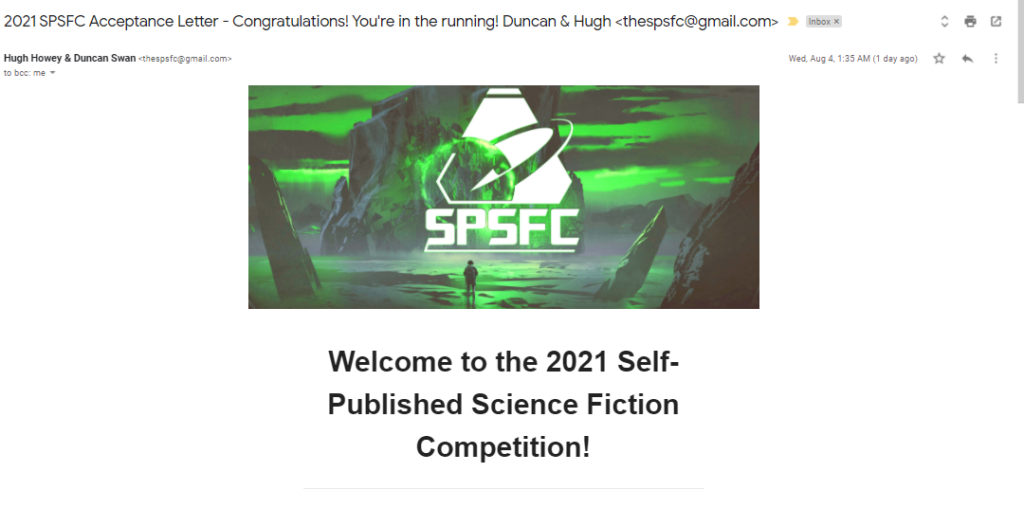
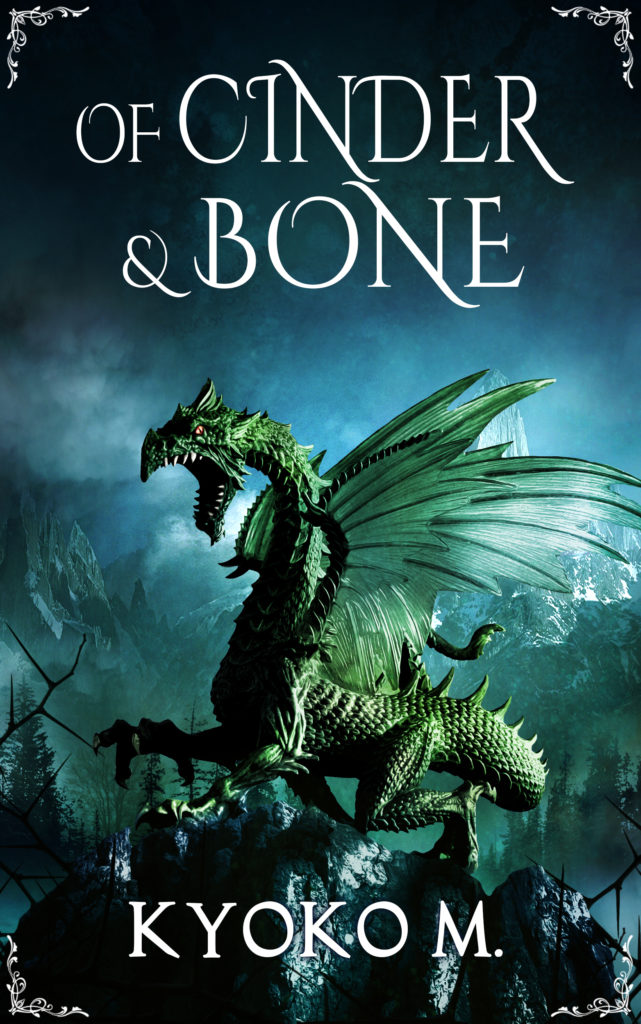
Good news, everyone! I submitted Of Cinder and Bone to Hugh Howey’s inaugural Self-Published Science Fiction Competition and made it through the very first round of selected novels! Yay!

Cover art by Marginean Anca of BRoze Designs

Here’s where you can learn more about it. In short, the contest is Top 300 -> Top 100 -> Top 30 -> Top 10 -> Top 3 -> 1 winner. Fingers crossed that the editors like it and it makes it to the next round. If not, it’s still an honor to have been chosen for this awesome competition. I still get to use it as bragging rights, after all. Stay tuned for more (hopefully)!

Update 12/11/2021: Well, the good news is Of Cinder and Bone made it through another round of cuts. It made it from the Top 300 to the Top 100. I also received a glowing full review as a result. Thanks for rooting for me, guys!

Update 12/14/2021: I also got another excellent full review from another one of the judges on the Red Star Reviews team. Check it out!

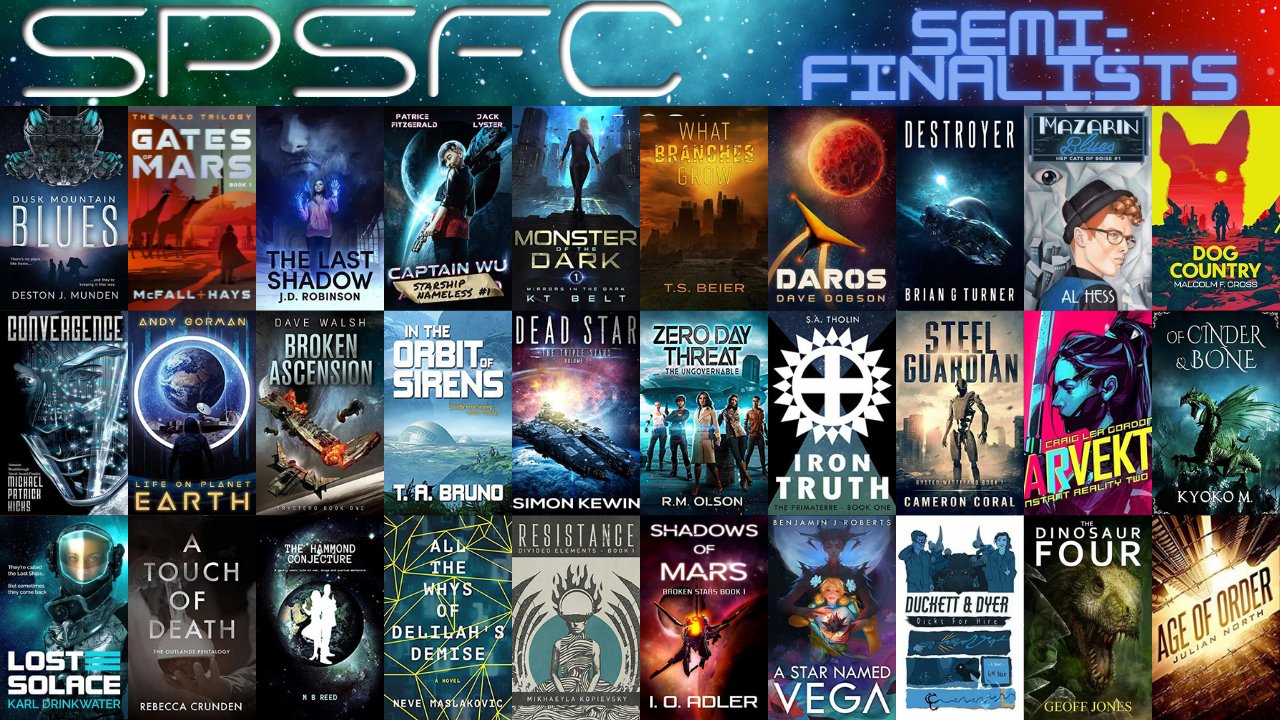
Update 1/28/2022: Amazingly, impossibly, Of Cinder and Bone was chosen for the Top 30 picks from the Top 100 list for the contest. Check out the graphic below of all the semi-finalists!

Update: 5/4/22: Well, it’s all over but the crying. The score for the semi-finalist round is so low I won’t dignify it by posting it here, but it’s been a privilege to even be chosen to participate in this competition. I met some lovely people and got some good blurbs from Team RedStarReviews. Congratulations to those who will be continuing on. Best of luck and I hope the judges read your books more fairly moving forward.

But I do get to use this for bragging rights from now on.

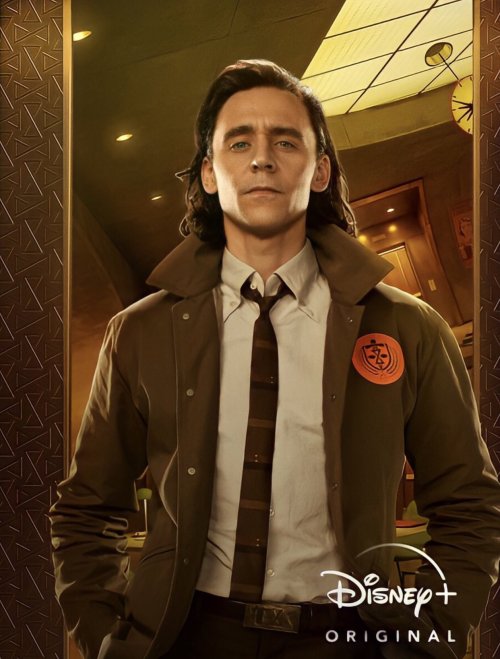
Cautionary Tale: Loki (2021)

Glorious purpose indeed.

Well, it’s happened again. A work of fiction had a strong start and then devolved into lousy material.

First off, obviously, spoilers for the Loki 2021 series as well as the general MCU films and shows up to now. You’ve been warned.

To give you some background, I actually wasn’t a Loki fan until far later in the game. I paid him no mind in the first Thor, enjoyed him in Avengers, and then slowly over the time between Thor: The Dark World and Ragnarok, Loki slithered his way into my heart. It’s not as if I think he’s the best character in the MCU or anything, but I adore him. He’s a shitlord. He’s so extra. He’s the embodiment of chaos. He managed to charm me and make me care about him, even becoming a sort of anchor character for me in my fanfiction writing sessions. Naturally, I was quite excited when they announced he’d been given a spinoff series after the events of Avengers: Endgame. I wanted to see Tom Hiddleston continue to shine in the role, even if it was just going to be for a brief extra story for us to enjoy.

And that’s how it started off.

Episodes 1 & 2 of Loki (2021) contain the content that I’d hoped for. We got to see Loki at the end of his rope, but in a different sense than his fate in Infinity War. He was thrown into an organization he knew nothing about and without his powers. He had to figure out how to survive without any hope of outside help, which we know he’s done before. It gave us some nice introspective moments, showed us he was human, showed us vulnerable bits to his character. We also got to see plenty of his faults and shortcomings, all of which was fun and interesting.

And then Sylvie showed up.

And as soon as she did, my enjoyment of the show pretty much evaporated.

ICYMI, Sylvie is a Loki variant who was caught by the Time Variance Authority at a young age, but she managed to (easily, so easily it was insulting) escape and hide in apocalypses her entire life plotting how to destroy the TVA for kidnapping her and removing her from her own timeline. Now, granted, on paper, that backstory is okay-ish, but Sylvie is my newest entry on the exhaustingly long list of fictional characters who suffer from what I call White Bitch Syndrome.

Now, I still plan to write a full essay on White Bitch Syndrome, but let me do a short definition here. White Bitch Syndrome is when a female character—and most of the time, she is white and blonde—in a work of fiction is given undeserved credit and disrupts the dynamic of whatever work of fiction she is in, causing negative consequences for those around her but never having to suffer those same consequences herself. To me, she is almost a subversion of a Mary Sue. She takes valuable screentime away from other far more interesting and well-written characters and does all of it with a sense of entitlement that makes me want to pull my hair out.

And that’s exactly what Sylvie is.

I cannot fathom what made the writing team for Loki decide that they should give 60% of Loki’s screentime to this snotty, entitled, obnoxious Loki variant. As soon as episode three hits, she completely co-ops Loki’s show to make it all about her.

And here’s the kicker: she’s not even interesting.

It’s a bait-and-switch. I came here for Loki (or Tom Hiddleston, depends on who you ask) and what did you do? You found the world’s most irritating white woman and gave her his show. This isn’t why I came here. At all. So not only did you give me something I don’t want, you didn’t bother to make her likable or even just interesting in general. The rules of writing, at least in my mind, are to make main protagonists in a work either likable or interesting. Sylvie is neither. She is such a borderline Mary Sue. She’s stronger, smarter, more powerful than everyone around her, she constantly shoots her mouth off to disparage Loki and the other characters, she thinks she’s better than everyone and the writing of the show seems to agree, and she makes EVERYTHING about her every second she’s on screen. It’s insufferable.

But that’s not the worst part.

What truly broke me was episode 4. I had to put up with this snotty character, fine, okay, as long as maybe I get some good Loki content with what little screentime he has left after she’s sucked it all up. No. It had to get worse. The show then states—after only one and a half episodes of interactions—that Loki has a crush on Sylvie/is attached to her.

Seriously?

He’s known her for like five minutes.

What the hell do you mean he likes her?

This element of Loki (2021) is what switched me from disliking it to outright hating it. Anyone who knows me knows that I hate it when fiction generates attachment between two characters without doing the leg work first. There are few things I hate as much as when characters barely interact and then the fiction states that now they’re in love or best friends or care about each other when there is little evidence in the work itself. Loki and Sylvie spent the entire third episode hating one another. The dynamic comes across like a brother and sister who can’t stand each other being stuck in the same place, having to make nice. Then the show just decides Loki is into her, despite no evidence, despite limited screen time, despite Sylvie showing no regard or concern for him at all. It comes across as the show telling us “this is a thing because I said so.”

And that’s not good enough.

Look, I know I’m biased. I’m attached to Loki and I don’t like blonde white women in fiction because of repeated instances of White Bitch Syndrome. But this isn’t jealousy. This is lousy writing. It is lousy of them to stuff this character into the narrative to take the focus away from Loki and it’s lousy of them to have Loki inexplicably have some sort of attachment to her when the evidence points to the opposite. He should simply be using her to get what he wants, but instead they have him following after her like a helpless puppy because her Super Special Awesome Powers are so much better than his and he can’t do anything on his own. They took a show with a unique premise and made a hard left, instead making it a platform for “ooh, look at this cool white girl” instead of keeping the focus on Loki trying to survive the TVA and destroy it. Loki honestly had more chemistry and attachment to Valkyrie–who soundly beat his ass and later begrudgingly tolerated him because they needed to stop Hela–than with Sylvie. I would believe he was into Valkyrie before I’d ever believe he was into Sylvie.

For me in particular, this is unacceptable because it just feels like Sylvie is nothing more than a vehicle for the white fangirls to imagine themselves into Loki’s story. It’s no secret that Loki’s fandom is majority female and I imagine it’s largely white women. Sylvie is a transparent Audience Surrogate Mary Sue-adjacent character designed to make said fangirls feel like they have a personal connection to Loki. They can easily see themselves as Sylvie and it seems to be the only real reason she was written into the story. If she had been properly written, she would have just remained a tangential antagonist either getting in Loki’s way or preventing him from reaching whatever goal he has for himself. There was no reason to write a forced wannabe romance into the story. It’s so unearned and unnecessary.

Alright, so I’ve made my case for why Sylvie sucks. Let’s pretend for a moment that I didn’t hate her with the fire of a thousand suns. That’s not the show’s only problem. Another reason why Loki (2021) began to tank for me is that Loki has almost no agency after the end of the second episode. The second he starts following Sylvie around, the show seems to forget this is a thousand-year-old demigod with magical powers and a wealth of schemes and plans. Everything from episode 3 onward has Loki little more than a doofus who likes to run his mouth. We don’t get to see any of that calculating intelligence that made us love Loki in his previous films and appearances. He’s not doing anything. He’s just stumbling from one place to the next utterly failing and not affecting change nor the plot itself. I fear part of the problem is that the writing staff took too much from Thor: Ragnarok without understanding that the film, while a comedy, also knew how to write a balanced Loki. We know Loki is capable of making mistakes, but the ones he commits in this show are egregious. It’s not organic to the character. It feels as if they are trying to emulate Ragnarok without allowing Loki the same agency and behaviors that made him so lovable in the first place. Think about it. Loki tricked Thor into thinking he was dead and impersonated Odin convincingly (or so we’re assuming, since we don’t catch up to him until 2017, which is 4 years after Thor: The Dark World) for entire years without anyone catching him. He then lands on Sakaar after Hela attacks and manages to worm his way into the Grandmaster’s good graces in only a matter of weeks. Loki has been an effective antagonist and part time protagonist for several films, which is why he’s been so popular. I don’t understand why they have written him completely bumbling and ineffective in this series after the halfway point in the story. In Fish Out of Water stories, you still need to have the protagonist affecting change and making important decisions that affect the plot and develop them as characters. He’s not learning anything, he’s not changing, he’s not growing. He’s stuck in the passenger’s seat while Sylvie drives the car off the cliff.

Speaking of unearned nonsense, this whole “friendship” between Mobius and Loki also annoys me. It’s like I’m not watching the same show. When did they become “friends”? Do they not know what that means? Presumably, Mobius and Loki spent several hours together investigating the Loki variant and while I actually quite like their banter, they too were not with each other long enough to consider each other friends. I don’t like it when fiction drops the F-word (friend, of course) unwarranted and this is another example. Mobius and Loki were at most colleagues. They were only together for two and a half episodes and then for a short bit in episode 4. The show yet again did not do the leg work but then handed us this forced claim of friendship when they’ve really just been enemies temporarily on the same side. I do think aspects of the relationship work, just not enough for the show to claim that now they are magically friends. It’s less of an eyesore than the claim that Loki likes Sylvie, but it’s still poorly written and has little evidence to back it up.

Another aspect of the show that bothers the hell out of me is they introduce Hunter B-15 and Judge Renslayer as powerful, competent women…and then sideline them. Hunter B-15 becomes Sylvie’s lackey after Sylvie’s enchantment caused her to remember her life before the TVA erased her memory. Hunter B-15 was introduced to us in a spectacular fashion, bitchslapping Loki and being an incredible force to be reckoned with. I remember being so excited to see a dark-skinned black woman on the Loki posters, hoping for more representation, and yet they’ve done what too many shows and movies have done with black women—forced them to be in the shadow of their white counterparts. Judge Renslayer is even more of a letdown that B-15. She is introduced as smart and coldly calculating, but then Mary Sue Sylvie EASILY beats her in combat and she’s turned into a mugging, desperate mess instead of someone who was ruling an entire organization with an iron fist for God-knows how long. It was fine for Renslayer to be off-balance finding out the Timekeepers weren’t real. What wasn’t fine was a white blonde woman domineering over a black woman who previously held authority. Renslayer presided over the TVA…and that’s the best she can do? Stall, lie, and babble in front of Sylvie? It’s so painfully obvious that the show wants to keep kissing Sylvie’s ass and insisting she’s the most powerful Loki of all and they sacrificed any potential greatness for Renslayer as a result. I don’t mind Renslayer turning out to be bad; she wasn’t giving off any other impression in the first place. What I do mind is having this white woman just sling her around like it’s nothing when Renslayer should be far more effective than that considering she’s been the boss for presumably years and years. Why the hell was she leading the TVA if she can’t even handle this one variant?

This issue in particular burns me up because while Marvel has been doing a really good job introducing people of color into the lineup and giving them agency, there has also been this trend of what I like to call checkmark diversity. This is when shows or movies include POC in a work as supporting characters in order to check off the diversity box, but they’re not actually giving these POC much to do. They are constantly overshadowed by the white characters instead. The show gets to claim they’re progressive and diverse, but when you look at the POC’s storylines and interactions, you actually don’t end up with anything other than window dressing. I can tell you several different ideas I had for what would become of Hunter B-15 and Renslayer, but none of those came to fruition. The focus remained on the three central white characters: Loki, Sylvie, and Mobius. We know for a fact that the MCU can write excellent black characters like Sam Wilson, Monica Rambeau, and Luke Cage. It’s a damn shame to have two enjoyable black women on this show and they’re just there to fill in a checkbox. It’s especially sad since I’ve seen some behind the scenes bits with the actresses and Tom Hiddleston and they get along wonderfully. It’s truly adorable seeing some of their interactions, so for the show to have them both end up doormats to the white leads is an utter disappointment for me personally as a black fangirl.

At the time of this post, there is still the Loki finale to be watched. Honestly, though, I have no hopes for it any longer. I had hoped that with the plot of episode 5 being Loki in what is basically Purgatory with other versions of himself that we’d get the focus back on him and his desires, but no. Sylvie finds him in like 10 minutes of screentime and goes right to making everything about her, fulfilling her White Bitch Syndrome duties and securing herself as a Mary Sue-adjacent character. I’m tired. I will watch the finale, but I’m expecting it to be just as disappointing as it’s been since the halfway point in the series.

It hurts me to say these things. I’ve written a metric ton of Loki/MCU fanfiction. I truly enjoy his character. I cried like a baby when he died in Infinity War. I really like him, but this show stupidly managed to take from him rather than give him more things, ironically enough. It’s not yet to a point where I declare it Discontinuity, but I am unfortunately not going to be really be taking anything away from this series. I’m probably going to ignore it and go back to my Denial Land of fanfiction instead.

My final point is that Loki (2021) is a cautionary tale because of its utterly squandered potential. The show’s trailers promised lots of things that looked amazing, but then once you pull off the cloak, all you get is a snotty OC and a very diminished, borderline derivative version of Loki. I am far more satisfied with the canon timeline Loki than with this Loki variant, which is a shame. I’m not to a point that I wouldn’t recommend the show, but of the MCU shows, Loki is certainly the weakest. It doesn’t live up to what it promised because of the writers’ inexplicable decision to give away his screentime to an entitled bratty character with, and this is just personal taste, a substandard actress with a grating performance. The lesson to be learned from this is that you have to know what you’re going after when you set off on a side story. The overall consequences of Loki have yet to be seen, but the implication is that the timeline is going to be destabilized and will then set off the Multiverse of Madness that will be addressed in Spider-Man 3: No Way Home and in Doctor Strange: Multiverse of Madness. That being said, I don’t think this show is strong enough to warrant anyone other than die-hard Loki fans a watch. I am open to the thought that maybe the finale will redeem the show, but it’s doubtful based on the evidence I currently have. More than likely, it’s going to go out on a whimper and not a bang and the romantic red string the writers forced around Loki’s neck is going to strangle him same as Thanos did.

I hope I’m wrong.

But I’m probably not.

Here’s to the multiverse. At least it has a version of Loki that’s not a disappointment.