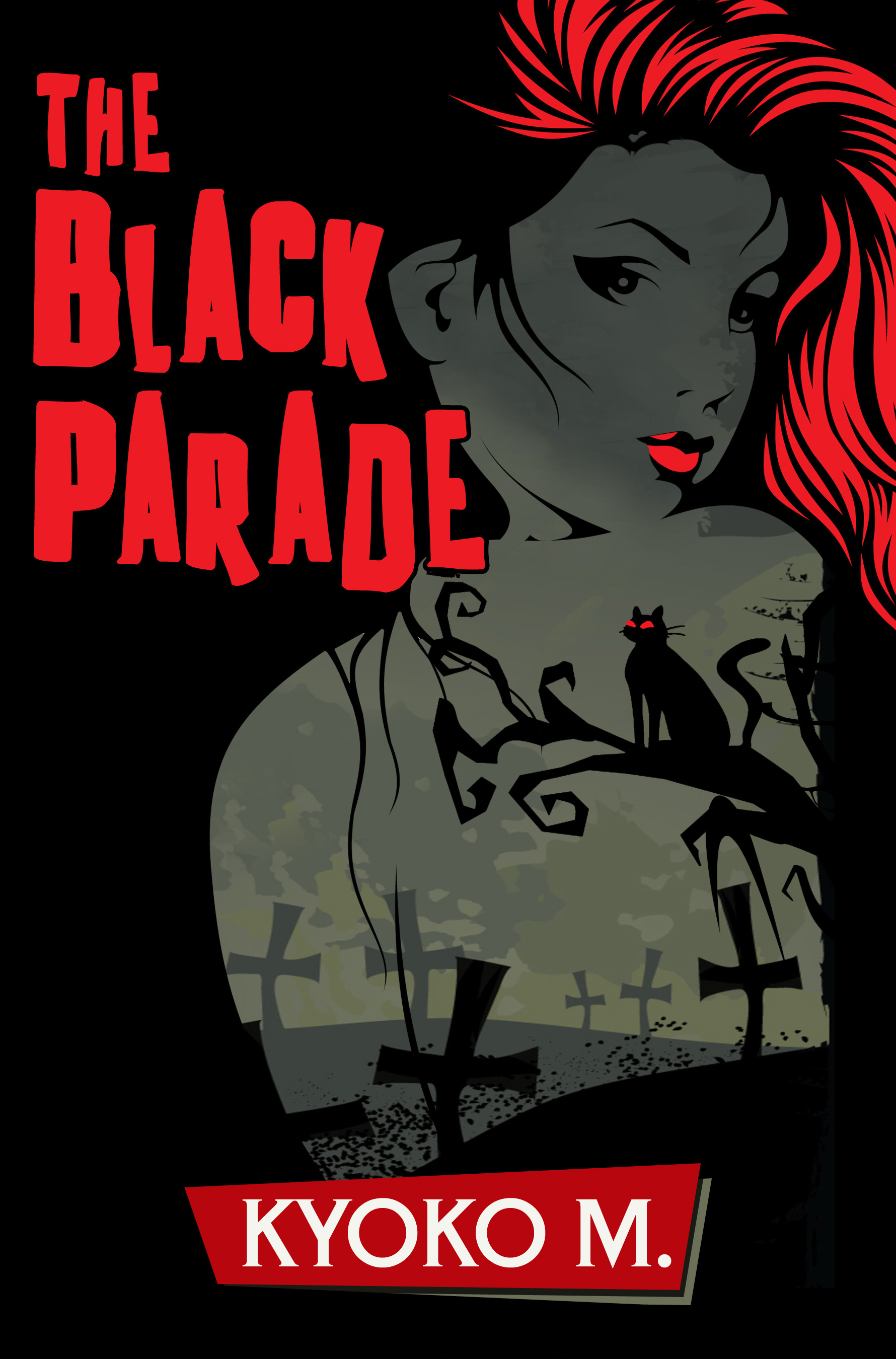
Happy holidays! The Black Parade is now free to download all week long, from now until December 29th, 2013. Swing by and grab yourself a copy. Share the link everywhere and anywhere you want. Review it, if you feel so inclined. Have fun, darlings.
Self-publishing is a lot of things. It’s scary, exciting, and still in its toddler stages, stumbling around bumping into tables and giggling as it spins around in circles with a bucket on its head. However, with the rise of self-published fiction smashing through the bestsellers lists, there is also a huge section of mass media devoted to exploiting it. Particularly, the sleazy jerks who keep perpetuating myths about self-publishing in order to sucker new authors into giving them money. I’ve been a self-published author for almost five and a half months. I’m going to give you the skinny on some of the bullcrap I’ve heard from these snake oil salesmen in the hopes that it may someday help a newbie author avoid falling under their spells.
8. “You’ll be the next E.L. James!” Not that you’ll write terrible smut based on terrible teen vampire fiction, but your self-published novel will fly off shelves and sell a billion copies and you’ll be a household name overnight and you’ll have so much money that you can swim through it like Scrooge McDuck. Nu-uh. There are hundreds of websites and spambots out there lurking with links to teach you how to become a bestseller, but don’t you dare listen to them. What I’m about to say is disheartening, but it’s totally true: there is no magic bean that you can plant and grow your novel into a bestseller. There just isn’t. You’re going to be tempted by all kinds of Twitter accounts and blog posts that swear they can teach you how to become E. L. James, but while they might be able to help you get exposure, it ain’t gonna happen. There is no bonafide, 100% definite way to become a self-published bestseller. Get that thought out of your head first before you do anything else. Otherwise, it will only hurt you more.
7. “You can totally design the cover yourself. You don’t need a professional graphic designer or artist!” NO. STOP THAT. NO. *whaps you on the nose with a newspaper* This is just plain offensive to me. You know that old saying, “You can’t judge a book by its cover”? That only applies to people, not actual books. Ironic, but true. Do not—I repeat, DO NOT—open Microsoft Word or Paint and fart around for two hours and claim that you’ve got a good enough cover to sell to people for actual money. You must be an advanced user of Photoshop, or any of the other massively successful art design software, in order to make your own cover for your book. I don’t care if you only write short stories or anthologies or autobiographies. Do not shortchange an entire industry’s worth of madly talented people by thinking it’s just a “do-it-yourself” project.
Most people choose to look at a book up close based on the cover. It’s all about your color scheme and who or what appears there. If you don’t believe me, check out your own bookshelf. Pick about five books and spread them out over your bed. Which ones did you pick? How did you notice them in order? Do you remember the story behind how you bought it? I guarantee that at least three out of the five books you pick were chosen because of a vibrant cover.
Your cover is like a tiny little boat you send out on the ocean. You don’t want a boat full of holes that is duct taped together. You want it to be sea-worthy. No one said you had to empty out your piggy bank and buy the most expensive, lavish cover of all time. You simply need to have a legit, eye-catching, professional cover. There are affordable options out there for you to use, so please, PLEASE use them. Nothing kills your chances better than a crappy cover. NOTHING.
6. “You don’t need an editor! You can totally self-edit!” NO. What did I say? *whaps you on the tuchus with newspaper* This is also very hard to hear when you’ve got shallow pockets and have lived as a broke ass college student for years. Many people think they are good editors. Many authors think they can catch their own mistakes. To quote our beloved Lex Luthor… “WROOOOOOOOOOOOOOOOOOOOOOOOOOOOOOOOONG!”
We are human. We have eyeballs. We also have a skewed perception of our own writing. If you’re a novelist like I am, when you read your own work, you often enter the state of mind you were in while you were writing the draft. This causes a phenomenon where your eyes will see what you thought you wrote, and not what is on the paper. This is exactly why experts like Chuck Wendig and Stephen King suggest either reading your work out loud or printing it out and following along with a red pen and your finger. If you stare a computer screen for a living, chances are, your eyes are filtering out a LOT of stuff. You’re never going to be able to catch all your own mistakes, no matter how talented you are, no matter how sharp your eyesight is, no matter how baller your B.A. in English Literature might be. Short of being a god, you can’t do it.
Authors are stubborn people. Most of them don’t want to hear this, but it’s the truth. However, the good news is that editing is also something that isn’t as hard to find as one thinks. The nice thing is that many professional editors and copy writers and beta readers are willing to work out a payment plan. You can have them edit sections and pay them for what you can afford rather than breaking the bank.
The only way to be a successful, professional self-published author is to present professional work. No matter how spunky and awesome your main character is, or how fresh your poetry sounds, no one is going to give a crap if you have run on sentences and dangling participles and comma diarrhea. Editing is your friend. Your best friend. Your hot best friend you have unresolved feelings for in your pants. Indulge them.
5. “Social media is optional. All you need to do is write the book and it sells itself.” Have you ever seen a television show that doesn’t have commercials for it? No? Then why in blue perfect hell would anyone think you can sell a book without marketing it? I know it sucks. I know it’s hard. I know it’s like screaming into a black hole. However, it’s necessary.
Without a publisher or a literary agent, you are the focal point. Every success is going to be on your shoulders, and thus, every failure will also be on your shoulders. Social media is often difficult and frustrating to navigate, but the reward is worth the trouble.
However, let’s take an aside and discuss the difference between marketing a self-published novel and hawking a self-published novel. Your goal is to create interest through conversation and engagement. You are not the old janitor on that Chappelle’s Show sketch going, “HOLLA HOLLA HOLLA HOLLA HOLLA HOLLA HOLLA HOLLA HOLLA HOLLA HOLLA HOLLA HOLLA I’M TRYNA HOLLA ATCHA BITCH DONCHA HEAR ME?!” That is irritating and it’s not going to get you anywhere. For unknown authors, it takes a year minimum to build anything resembling a following for your book, no matter what genre it’s in. There are all kinds of social media suited for your needs—starting with Twitter and Facebook and expanding outward to Tumblr, Reddit, Pinterest, and Youtube. You have plenty of chances to test them out and see which one works best for you. It’s all about trial and error. Some people will run right out and buy your book. Thousands will pass. Some will put in on their shelf to read later. Don’t cry. It’s all a part of the game. If you write a good book and you take the time to learn how to engage people, you’ll get there. Be patient. Be stubborn. Believe.
4. “Reviews will pour in unprovoked. Just give it time.” So I’ve already mentioned how vital it is to get a good, professional cover for your book. It’s enormously important. However, one thing people sometimes gloss over is reviews for a book. This applies in particular to online retailers like Amazon, Smashwords, Barnes & Noble, and iBookstore. Most people who are considering whether or not to buy a book need a tipping point. This refers to a number of good reviews, or a number of reviews in general, that confirm their belief about if they want to take a chance on your book or not.
Sadly, lack of reviews is no reflection on the quality of a book. Neither is a surplus of reviews. (I mean, come on, look at how many reviews Twilight has. Jeebus.) However, it is still an important numerical figure that will impact your potential readers whether you like it or not. How do you fix this problem? Fortunately, it’s not impossible to find a solution.
The first step is politely asking friends and family to read and review the book. This may make you uncomfortable and insecure, but it’s usually the easiest way to get about three to ten positive reviews for free. After all, in the beginning, it’s about getting the ball rolling. If your friends or family members are hesitant, tell them they don’t have to be detailed– just write a paragraph about what they liked or why they liked it. Most of them will say yes if you ask for something that simple.
The second step is to find a database of book bloggers and book reviewers who review your genre and create a wishlist for yourself. Read their submission terms from top to bottom and choose the ones you believe will read and enjoy your novel. Do not create a chain email and blast them all. You will not get a response. That’s rude and disrespectful. If you expect them to take the time to read your book, you must take the time to ask them in a professional manner. This is quite time consuming to do, though, so it’s best to knock it out a handful at a time. Do a couple a day throughout the week. Some will not respond, some will say no, but some will say yes, and they are very important for the future of your work. If you get them hooked and you’re writing a series, chances are that you can rely on them to review your second or third book when it comes out. Brand loyalty is a good thing, trust me.
The third step is to then post your book somewhere where reviews are frequently read and are detailed, like Good Reads. Most people on Amazon will pop by and read the best and worst reviews of a product. People on Good Reads do the same, but they expect quality rather than volume. They expect to find out exactly what went right or wrong with the novel instead of a general overview of the contents that you usually find on Amazon or other book retailers. This is going to be a slow burn as most self-published novels tend to get buried underneath the traditionally published ones on Good Reads, but it can definitely help your book get a good reputation. If people see that it is shelved and positively reviewed a lot, chances are they’ll put it on their own shelf to read someday.
3. “You don’t have to get a professional website/blog. Any one will do.” Jim Butcher once said, “Keep conducting yourself like a professional, and you’ll get someone to believe that you are one. If you’re lucky, maybe even yourself.” Traditionally published authors have to conduct themselves like professionals (unless they are Laurell K. Hamilton, but that’s a story for another day…) in order to keep selling books. People take them seriously because they have well-made book covers, nifty Twitter pages, and easy to use websites. You should do the same because while you may not have a big, wealthy publisher backing you up, you still need the same prestige and reputation that is entailed with being a professional author.
Websites can also get expensive and painful for your wallet, but the best thing to do is start small. Start with any of the free web domain hosts and work from there little by little. Include all the things that make you interesting and back-link your social media to land on your homepage. The website will eventually become the central hub for your online presence. You want it to become a Launchpad not only for your book, but also for any other activities that you do as an author, and as a person. Creative people typically have more than one outlet, and your website is the best way to show people that you can do stuff other than write about pretty men and sarcasm.
2. “Your book is unique and that’s why it’s going to sell millions!” Take a note from Tyler Durden, babies. “You are not a beautiful or unique snowflake. You are the same decaying organic matter as everyone else, and we are all a part of the same compost pile.” As harsh as that sounds, it’s also the truth. There is nothing new under the sun. Your novel is not the most original thing on the earth. I promise you that you can Google the plot of your book and find it’s been done somewhere else. Hell, someone might even do it better. But that’s not my point.
My point is, so what? Why should I read your book? Why should anyone? What’s your angle? Why should anyone give a rat’s left buttcheek about what you have to say? That should be your main focus as a self-published author—separating yourself from the pack. People don’t buy McDonalds because it’s delicious and nutritious. They buy it because it’s hot, cheap, and fast. That is what makes Mickey D’s different from the other chains. What you have to do is create that distinction as a self-pub author. You have to create more than just a great book. You have to create your own experience, your own brand, in order to draw in readers.
Think about your favorite authors, not their work, but who they are as people. How many of them do you know on a personal level? Are they funny? Are they quirky? What makes you care about them, and subsequently care about their work? These are the things that create longevity for authors both traditionally and self-published. If you can prove to the readers that what you have to offer is worth their time, then they will stick with you regardless of if your work is “original” or not. You have to connect with them in order to get your book in their hands. It won’t happen by magic fairy fart gas. It’s you.
1. “Anyone can be a writer, even you!” So most people in the world have hands with all ten fingers, and they can take these fingers and use them to scribble with a pencil, or pen, or the blood of children, and create something called writing. Technically, anyone can perform the act of writing.
But that doesn’t mean that they should.
Yes, anyone CAN be a writer, but not everyone can be a GOOD writer. One of the greatest lies self-publishing has taught the world is that anyone can write and publish. This is horseshit. Total butt-droppings of epic proportions. For as many beautiful authors as there are out there, there are a hundred-thousand hacks who will flood the market with steaming dung-heaps. I mean, Stephen Colbert did a segment on a section of published fanfiction that features human on velociraptor action of the sexual nature. So, no. Everyone can’t be a writer. Everyone can’t even be sane, let alone write.
This is where you come in. You will have to do everything you can to make a life jacket to help your book float to the top of the shit-ocean. No one said you had to be Stephen King, but you have to know the actual craft of good writing before you even attempt to self-publish. You don’t have to have a fancy edumacation or anything, but you do need to know the basics. You need to know about grammar and language laws. You need to know about story arcs and character development. You need to read awesome literature and then read terrible literature, and then understand what makes them different. Do this and you will be a good writer who sells books. Don’t do this, and Godzilla will creep up on your someday and ejaculate into your eyes. You can quote me on that.
And those are the biggest myths that I’ve heard as a self-published author. This subject is still on going, though, so I suspect there will be a part two to this list in the not-too-distant future. However, don’t be discouraged by anything that I’ve said. All that I intend to do with this post is set the record straight and keep new authors from falling into the Rancor pit. Pick up your light saber, young Skywalker, and prepare for your journey.
-Kyoko
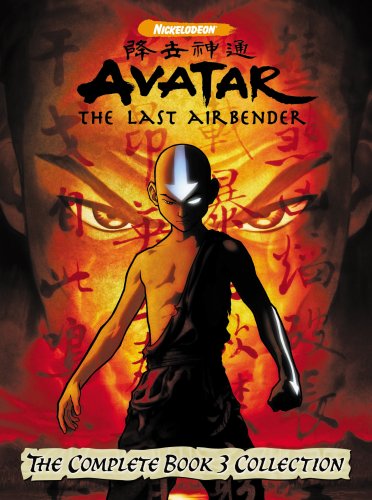
The second season of The Legend of Korra is ending soon. I, uh, wish I had better things to say about it, but that’s a story for another time. With season two on its way out, I’m feeling a bit nostalgic for the show that got it all started.
Have you seen this show? If you have, high-five. If you haven’t, hold up your left hand, extend your first finger, and jab yourself in the eye. Hard. After you see the eye doctor and he okays your vision, then go out and buy the DVDs. It’s that good. Thus, I will spend a minute or two talking about all the wondrous things this delightful animated show has taught me.
Underage characters are just as interesting as adult characters. Anyone with experience in reading Young Adult fiction, or who frequently watches cartoons/anime intended for children, has heard this tired, common complaint. Unfortunately, a lot of folks think that just because a novel/short story/cartoon/anime stars a child, it won’t be as good as something with a teenager or adult protagonist. This is such pure bologna that it should be represented by Oscar Meyer. Children are interesting. They are engrossing. They are capable of incredible things, whether they are good or bad. Avatar TLA knew this right of the gate. It introduced us to one of the most amazing spread of characters in all of animated history. Every kid had their own personality, their own agenda, their own beliefs, and their own dreams/goals. It is simply staggering to know that there are seven main young characters (and that’s just the ones central to the plot: Aang, Katara, Sokka, Toph, Zuko, Suki, and Azula) and every single one of them develops and changes over the course of three seasons. Age only determines the way certain things unfold within a story. It often does not limit the spectrum or scope of things that happen. These kids still deal with all the horrible parts of life that adults face at one time or another: violence, rage, hatred, racism, sex, fear, faith, and that’s just for starters. The writers (affectionately called “Bryke” for Brian Konietzko and Martin Dante DiMartino, because both their names are a mouthful) did not treat their audience like drooling infants. They wrote the Gaang the way all shows should hope to—with balance, maturity, and respect.
‘The Chosen One’ trope is not always a cliché. Everyone knows this trope: the “one” who is prophesized to end a war or battle of some sort. It’s been around since the Bible days—Jesus, Luke Skywalker (or Anakin, if you decide to believe that the Star Wars prequels exist), Neo, Harry Potter, and John Connor are just the ones I can rattle off the top of my head. Sometimes it can really wear on the nerves when one character’s actions will affect an entire society, or even a world.
For instance, while I generally disagree with the massive hate over the Matrix sequels, one of the main reasons they were disliked is because after Neo got all his powers, he stopped being an underdog, and a normal guy in an abnormal world. If not written properly, the Chosen One can destroy a story and make the reader want to throw your book across the room. I hate to point fingers (usually), but the Fallen series by Thomas E. Sniegoski also had this problem: a bland, douchebag character who was “the Chosen One” and yet all he did was selfishly bitch and moan, neglect his duties, and get people in his life murdered. However, ATLA was a refreshing change from the tired stereotypes of the Chosen One.
First of all, Aang is freakin’ adorable and peppy and cheerful and wide-eyed and goofy. It’s so easy to like the kid. You’d have to actively try to hate him. His idealism is what makes him both strong and weak throughout his journey, especially his struggle to find a way to stop Firelord Ozai without killing him. The show laid bare all of Aang’s inner turmoil and expanded on everything he learned from his friends and his enemies. I think all writers should watch the show and takes notes, especially those who might consider writing a Chosen One character at some point in their careers.
Another important factor that ATLA got right was to PROVE why Aang was the Chosen One: for his skill, his love of the world and the people in it, and his ability to unite them. That can go haywire quickly. Anakin Skywalker via the Star Wars prequel had this problem in spades. Through all three movies, everyone kept talking about Anakin being the one to “balance” the Force, and yet we’re never shown why. He NEVER shows any great potential, other than the potential to whine incessantly, glower creepily at Padme, and throw temper tantrums that result in murdering lots of people. He had some Jedi skills, but not enough to warrant all that attention. ATLA avoided this and proved that there is a way to do it right.
Don’t be afraid to explore other cultures. Alright, lower your pitchforks. I’m not one of those writers who believes that white people are the devil. I am, however, realistic about what’s out there in the main media. When it comes to fantasy and science fiction genres, white characters are predominant. Often, it happens because there are just a ton of incredibly talented writers. Still, there is a stigma whispered about that ethnicities can’t bring home the bacon, and that’s just not true. ATLA integrated several different cultures—Chinese, Japanese, Hindu, Indian, Eskimo, and that’s the tip of the iceberg, hahaha I made a funny—and still knocked it out of the park without (a) being offensive or (b) compromising great storytelling. This is another aspect I think other writers should make a note of for the future. Culture is what makes the world go ‘round. At the end of the day, all writers end up talking about can boil down to how similar or different their characters are. There are beautiful and hideous things about every culture. We should explore them, and explore them without restraint. A character’s race should never be a deterrent. If it is well written, it can be enjoyed by a person of any background.
Women are awesome. I really don’t need to go on long about this one. ATLA has some of the best female characters of all time, bar none. I mean, Toph. Just…TOPH. If you somehow don’t worship the ground she earth-bends, then there’s always Katara, Suki, Azula, Mai, Ty Lee, Princess Yue, June, Avatar Kyoshi…I could go on for ages. ATLA knew how to write girls, and write them better than a hell of a lot of other shows. Mostly because Bryke knew that girls are the same as boys—they have emotions, thoughts, fears, desires, and everything that the male characters have. There were very few stereotypes to be had and every character had a purpose in the show. That, to me, is one of the greatest things that ATLA accomplished in its run.
Honestly, I could probably go on longer, but I have to stop worshipping at some point because my knees are tired. Seriously, though, if you haven’t checked it out, please do. It’s worth your time, believe me. I’m glad to have grown up with a show that believed that I could handle a great story and didn’t talk down to me. It’s something we should all have, no matter how old we are.
Kyoko

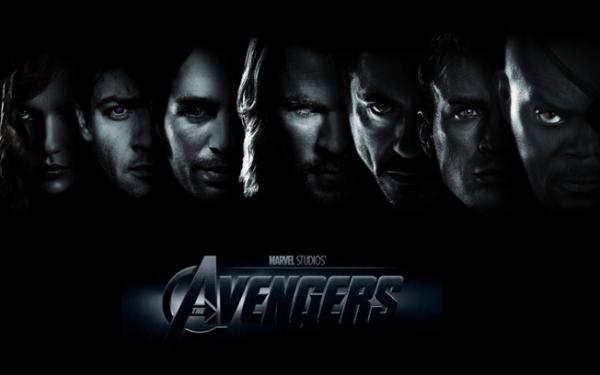
Face front, True Believers! Thor: The Dark World is premiering early in my current town of residence tonight and I could not be more excited. I know some people are a bit lukewarm about the God of Thunder, but I am just not one of them. Still, Thor is just one of Marvel’s greater successes, at least in my humble opinion. In honor of our big blond teddy bear god hitting the silver screen tonight, I’d like to take a quick look at some of the things that the Marvel Movie Universe has taught me over the years. I’m also taking a bit of freedom here with the term ‘Marvel Universe.’ I’m not simply talking about the continuity they created starting with Iron Man. I’d also like to take a look at their previous franchises like Spider-Man and X-Men because they are huge parts of my childhood as well as great teaching tools.
Know thy fanbase. This is one thing that Marvel has nailed repeatedly in recent years. They have an unparalleled ability to listen to their fans and figure out where to go from there. They didn’t always have this talent, mind you. A perfect example would be the horrific abomination that is Spider-Man 3. It’s common knowledge that one of the movie’s biggest reasons for sucking was due to executive meddling, where the studio poked their big nose into Sam Raimi’s script and told him to do stuff. It resulted in an overstuffed, over-the-top farce of a film that laid waste to the film’s previously excellent reputation. Here’s where knowing the fanbase kicked in.
Disclaimer: I didn’t like the Amazing Spider-Man. I’m sorry. Hate me if you wish. I just couldn’t help myself because Spider-Man and Spider-Man 2 are without a doubt two of my all-time favorite superhero/comic book movies. I grew up on them. I watched them hundreds of times, and I still have to stop every time one of them comes on. They have so much heart and depth and wonder to them. However, it turns out that while those two films broke box office records and definitively proved that superheroes are worth the general movie audience’s time, a lot of fanboys and girls were unhappy with certain aspects of them. The most vocal complaint was Kirsten Dunst as Mary Jane Watson, which I understand completely. I liked Mary Jane well enough in the first film, but by the second and third films, I kind of wanted her to get the Gwen Stacy treatment. She was weak and nagging and got stuck firmly in the “damsel in distress” role whereas in the comic books, she often kicked ass and sassed people like no one’s business.
Marvel gathered up these comments and then made the brilliant move of picking everyone’s favorite redhead (ironically to play a blonde; double ironically because she’s a natural blonde) Emma Stone to be Gwen Stacy. My dislike of Amazing Spider-Man notwithstanding, I fully admit this decision was a God-send. Emma Stone is funny, sexy, snarky, and an absolute joy to watch. While I still would have liked her as the new MJ, she did everything that I hoped she would do. Marvel understood that the best way to win over their fans was to listen to them and learn from their past mistakes.
In terms of writing, Marvel’s method is something I think all writers should enforce. I would never try to pander to my fanbase (if I had one), but I would take a serious look at the criticisms that arise for my work. Writing is subjective. So is the act of reading. No one reads a book the same way, and fans will inevitably find something in my writing that I didn’t know was there, or that I never considered could come across. If it’s a universal problem, it would be wise to address it either in a blog post, or more likely, subsequent works of mine. There are very few drawbacks to accepting detailed, intelligent arguments against your own work. Even if it pisses you off to your very core, you can only go up from there.
Give a damn about your own work. Strap in, folks. Mama’s about to lay the smackdown on some things here. To me, it is always easy to tell when Marvel gives a shit about their work. The quality of the filmmaking is the most telling of all. Stuff like Daredevil (bite me, nerds, it’s a shit film and you know it), Elektra, The Punisher (which I admit still has a corny charm to it), X-Men: The Last Stand (and that’s coming from someone who kinda likes it), Ghost Rider, and Fantastic Four have clear evidence that they weren’t invested in their products. I argue that each of the listed films lack charisma, effort, and heart, and was pushed out more to make a profit than to actually be considered worthy of the Marvel name.
On the flipside, films like The Avengers, X-Men and X-2, Spider-Man and Spider-Man 2, Iron Man, Captain America, The Incredible Hulk, and Thor have evidence that Marvel gave a crap and wanted to make great movies for its audience. They chose great directors, writers, and actors—people we love and trust to bring our favorite comic characters to life. Do you remember the day they announced Robert Downey Jr. to play Tony Stark? We all flipped our shit in celebration of such perfect casting. Same with Joss Whedon getting to direct The Avengers, which is arguably the best Marvel film to date, or Edward Norton getting to play Bruce Banner. These movies all went on to do incredibly well at the box office because Marvel put their foot down and opted for quality over profit. They knew that profit is a result of quality. They recognized that if they took their time to make a fantastic film franchise, they’ll make bucketloads of cash and keep us happy for decades to come.
It seems like common sense to give a crap about your own writing, but sadly, these days it is not. Anyone can be a writer. We live in a world where a faux masochistic relationship that was ripped off from a creepy codependent relationship between an emo teenage girl and a vampire both out-grossed the intricate, beautifully written world about a boy wizard. We live in a world where the crappiest of films can get sequels. We live in a world where actual effort is an afterthought. The easiest thing in the world is to not try.
Don’t be that writer. Sure, E.L. James and Stephanie Meyer are literally swimming in cash, but that doesn’t have to be you. The happiest authors in the world are the ones who stay true to themselves and write honestly. They write from within. They strive to make the best for us readers because they care and they want to create a wondrous world for us to dive into. They want to leave behind a legacy they can be proud of. Authors like Neil Gaiman, J.K. Rowling, and John Green are all down-to-earth, humble, and full of life because they give a shit about what they put out there.
It’s unwise to compare oneself to bestselling authors, but they can also simply be a north star for young authors. Yes, it’s daunting that crappy novels make money, and crappy movies make even more money, but for every turd there’s a gem. Shoot for that instead.
Have faith in your own product. There’s a line from the movie Hitch that I always think about when it comes to certain aspects of writing.
Albert: You’re selling the stuff, but you don’t believe in your own product.
Hitch: Love is my life.
Albert: No! Love is your job.
Marvel is by no means perfect. I’ve already listed the films I consider to be travesties. But that’s also something I think they have learned well in the past decade. One of the main reasons why I favor Marvel over DC in the film department is the overwhelming amount of faith that they appear to have in the characters as well as their audience. They seem to recognize that there is a reason these films do so well. These characters and stories helped many of us grow up. We read them dozens of times as kids and we still follow them as adults because heroes inspire us. Heroes make us believe in the impossible. They make us want to be better than who we are. The Marvel films that tend to be better in quality are those where you can tell that the writers, directors, and actors actually care about the subject matter and want to do it justice. Tony Stark is by far the most popular of the Marvel universe, and guess what? He’s an asshole with a drinking problem. We can totally relate to that. Sure, he’s a billionaire, but most of us know someone like that—an insanely talented friend who has a good heart, but lacks focus and belief.
Marvel is out there kicking the box office’s ass every year because they believe in our heroes. They don’t always get it right (I’m still angry about Barakapool from X-Men Origins and whatever the hell they did to Beast in X-Men: First Class) but it is clear that they realize if they make a good film, we’ll watch it. We’ll stand outside in a line to San Diego Comic Con for hours just to catch a glimpse of the next one. We’ll waste hours online crying over Tom Hiddleston’s perfection. We’ll buy tickets early and dress up in costumes even when it’s nowhere near Halloween. It’s love, plain and simple.
Maybe you’re not Jim Butcher or Stephen King. So what? Do you have something to say in your writing? Do you want it go be good? Bam. There you go. That’s it. That’s your secret. No one said you had to be Shakespeare. The best way to become a great writer is to invest in your product the same way you invest in the TV shows and books and movies and video games you love. Pour your soul into your writing, even if your soul is twisted and scary and broken. Authenticity is key. No one will believe in your work if you don’t believe in it.
With that in mind, I hope that Thor: The Dark World uses the positive examples I discussed above. We have a lot of exciting films coming our way in the not-too-distant future and I can’t wait to see more as long as they adhere to their better works. Here’s to you, Marvel. Excelsior!
-Kyoko
P.S. While I’ve got you here, did you know that the giveaway for a free copy of my novel, The Black Parade, is still going on? Why not pop by and enter to win? It only takes a second. It ends Monday, November 11, 2013. Don’t miss out!
Holy crap. It’s November. NaNoWriMo is here. HEAD FOR THE HILLS.
Ha, that was a joke. You’re not going anywhere, writers. I’ve chained you by the ankles and now you have to sit and listen as Grand Master Kyoko tells you about NaNoWriMo and why you should be doing it.
For those who don’t know, NaNoWriMo is short for National Novel Writing Month. It’s a competition in which we write a novel in a month, starting on November 1st and ending on November 30th of every year. What do you win? A cool little button from the official website and eternal bragging rights.
Now, if you’re not a writer, you might be thinking, big deal, it’s just a novel. Uh, no, newbie, let me shut you up right there. It’s not a book. You have to write exactly 50,000 words in thirty days. And no, John Bender, I don’t mean the same word repeated 50,000 times. You’ve read a novel before. That entire story typically takes a writer between four and eight months, depending on what level they’re on. And they are expected to do that within thirty days so you had damn well better respect it before I box you upside the ears.
Back to you, writers. As it says on most of my author profiles, I participated in NaNoWriMo in 2011 and actually completed it. But I’m not trying to brag when I mention it—I’m trying to add some authenticity to this post. That crazy, painful month taught me a lot and I’d like to share it with you to give you encouragement on your first day of writing.
Writing is f@#king hard. Now, granted, you already know this, authors, but trust me, NaNoWriMo is going to enforce it like a bouncer outside of a sexy night club. You’re going to feel like Judge Doom at the end of Who Framed Roger Rabbit—flattened while you flailed and screamed in a high-pitched voice. It’s hard enough to pound out 50,000 words a year for a paycheck (or for nothing if you’re an indie author like me hahaha it hurts to laugh), but cramming all of that process into a month is going to make you want to eat a bullet. But you’re not going to do that. Tuck in your skirt, lady.
Writing is hard because it’s worth it. You’re going to have days when you write the full 2,000 word a day quota, and then you’ll have days when you write two sentences and then eat a bucket of Americone Dream while sobbing that you are a total failure. You’re going to struggle over character motivations and action sequences and witty one liners and it’s going to suck. You’re going to stare at the clock and wonder how you ever thought this was a good idea. You’re going to curse God and try to make a deal with Lucifer in order to inspire you to reach that finish line.
And you know what?
That’s a good thing.
It’s all about pacing yourself. This is also a concept that is infinitely hard for writers because the creative process isn’t like the scientific method. There isn’t a quota or a calculation to writing. There is no formula. It’s all free ideas flowing constantly through your brain and your soul. It comes and goes. But you don’t have time for that hippie stuff when you only have a month to write a full on novel. What NaNoWriMo taught me is to simply let go: let go of the perfect dialogue, the flawless landscape of the plot, the meticulous character details, all of it. NaNoWriMo is all about raw materials. A diamond isn’t beautiful until it’s polished, but it’s still a diamond. No one said you had to pull it fully cut out of the ground—you simply have to dig for it and you’re there. Your draft is going to be total garbage at first, but that’s the entire point. NaNoWriMo is dumpster-diving, plain and simple. You learn to dig through different piles each and every day. You’ll find some yucky stuff and toss it aside, but you’ll also find buried treasures that you never thought you could find.
There are also plenty of resources to help you with pacing yourself each day. To total up to 50,000 words in a month, you basically have to write 2,000 words a day, but that’s rounding up. There is an exact number of words (around 1,600 or so), but I think it’s healthier to aim for 2,000 because then if you fall short one day, you’ll still be ahead by a little bit. That way, if you have a long day at work and you don’t have time to write, you can realistically catch up.
Let go of your inner perfectionist. I feel like such a hypocrite saying this, but it’s definitely a hard lesson that NaNoWriMo taught me. I get my perfectionist habits from my parents—a business consultant who is working on his Ph.D and a registered nurse who works in case management, respectively—and they aren’t easy to kick. I take it ten times more seriously in my writing than in my real life, too. I obsess over every single word and where it is and how it’s phrased and how I can make it so perfect that publishers will bang down my doors and filmmakers will run up to me begging to make my book into a movie so that I can finally achieve my dream of meeting Nathan Fillion and marrying him and oh wait I lost my point back there, didn’t I? Ahem. I fret over my own writing day and night. I think I’m substandard. I weep that I’m not Jim Butcher. I read my favorite novels over and over in vain attempts to soak up their greatness and squeeze it back out over my own manuscript.
But you can’t do that in a month.
A month gives you enough time to map out where you want to go and then you just trail-blaze, like Miguel and Tulio. Don’t stop for all the little stuff. You have words to write. It’s like cutting through vines in a jungle—you’ll get stuck if you stop every five minutes to clean the mud off your boots. You have to let go of all the things that make you want to stop and edit and erase what you’ve written. You can’t do that. You have to accept your faults and move on because this is about the end game. You’re heading for that pyramid with the huge diamond on top. You have a goal and by God, you’re going to reach it and don’t let that crazy person in your head talk you out of it no matter what.
The reward outshines the difficult journey. First of all, don’t you dare get down on yourself if you are unable to finish NaNoWriMo. You are NOT a failure. This is one of the hardest competitions any writer will ever face, so don’t even think for a second that you are less of an author if you don’t complete it in time. I’m not saying this to coddle you, either. The truth is that NaNoWriMo has more than one reward. It’s not just about the bragging rights. Even if you don’t finish on time, there are still great things to gain from it.
First of all, you still have an original idea in manuscript form. That’s fantastic. Once November is over, you’re free to go back to being a regular crazyface author and you can do whatever the bloody hell you want with your new story. You can chop it up into bite sized pieces, you can make it into a series, you can turn it into a screenplay, you can do anything. That’s an incredibly liberating notion, isn’t it? All the rules no longer apply and you can take it wherever you want, including nowhere if you don’t like it (like I did. The Starlight Contingency was a one time gig and I have no plans to finish it, but it’s still great that I did it. But if you’re curious, you can read the entire thing for free right here: The Starlight Contingency.)
Second of all, if you do win, you can always look back on that victory no matter what happens in your future career. No one, and I mean no one, can take away that fresh, exhilarating thrill when you think about the fact that you condensed months’ worth of work into thirty days. Not everyone can write a novel. Sure, some hacks can fart one out and become bestsellers, but they didn’t do it in a month. You did. You’re awesome. You’re a god. You’re Elvis. You’re one bonafide bad mother sucker.
And after you do it, take the time to celebrate. Strut down the street like you’re a sexy piece of ass and don’t let anyone tell you anything different. You did something worthwhile and that very few people could ever do. That’s the real reward of NaNoWriMo. It’s a celebration of the writing process and celebrating the brave souls who do it, whether just for a month or a year or for their entire lives.
And that might sound corny, but I truly think that is why every single writer should try it at least once in their lifetime. Whether you complete it or not, you’re going to learn something for free.
Who doesn’t want that?
Good luck, my darlings. Open that document and get started.
Don’t worry. I got your back.
-Kyoko